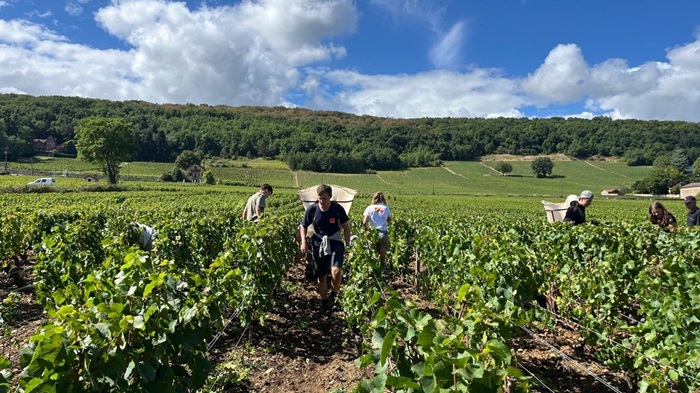
The harvest has started in France, but it’s far from over. And since we’re on the subject, let’s dive behind the curtain and see what happens at harvest time. How, for example, do winemakers determine the ideal picking date?
How do winemakers decide when to harvest the grapes in France?
Their decision depends on several factors:
– The first, of course, is the ban des vendanges: the official authorisation to begin the grape harvest, set by the county hall following a meeting with representatives of the appellation unions and the French National Institute for Origin and Quality (INAO). Except by special dispensation, winemakers may not begin picking before the official start of harvest is declared. As a rule, the best estates pick well after this date. It’s also often noted that the harvest takes place 92-93 days after full flowering in warm years and 105-110 days in cool, wet years. So the window is two to three weeks… But in some years, full flowering is hard to gauge, as there can be wide variation depending on the weather at flowering, the grape variety, the terroir, and so on.
– The second key factor is, of course, grape ripeness, which is itself assessed in several ways, chiefly sugar ripeness (when the sugar in the grapes reaches its peak) and phenolic ripeness (when the pips are ripe and lose their pronounced astringency). To assess ripeness, the winemaker has a couple of tools: the refractometer (a handheld, telescope-like instrument you hold up to the light to read the sugar in a drop of juice from a single grape) and the hydrometer (a thermometer-like float you put in the grape must to estimate the probable alcohol after fermentation). But the winemaker’s most reliable tool is often simply their palate. Regularly tasting berries carefully selected from each of their vineyard parcels is the best way to be sure of producing the wine they have in mind.
– Other factors also play a part, such as the winemaker’s style. For example, they may wish to retain some freshness in the wine by picking before full ripeness. We also take into account the weather conditions and the weather forecasts, which can prompt us to bring the picking date forward or delay it, depending on how ripeness is progressing and the risk of heavy rain at harvest.
Hand-picked or machine-harvested?
Naturally, before the 1970s the question simply didn’t arise… Today, many appellations, including prestigious ones, permit machine harvesting. Those who use machines will, of course, explain all their benefits. Even so, from a quality point of view, there is still no substitute for hand-picking carried out with proper care, giving pickers clear instructions to cut only healthy, fully ripe bunches or clean sections of bunches free from rot, and bringing the grapes to the cellar in small crates (to prevent the combined weight from bursting the grapes before pressing).
The mechanical harvester, which shakes the vines to dislodge the berries, has several drawbacks. It is tough on the vine (machine-harvested vines rarely live beyond 30 or 40 years), it does not sort ripe from unripe or rotten berries, and it often brings plenty of plant debris along with the berries (leaves, branches), or even snails and slugs! Grapes harvested in this way often split, and the fruit piled in the harvest trailer sits in juice that tends to oxidise before it even reaches the winery for pressing. Manufacturers of the machines have nonetheless made progress and are working to minimise these drawbacks (mesh-bottomed bins to separate the juice from the berries, gentler harvesting methods, etc.).
It’s only fair to recognise that the machine has its advantages too. It makes it possible to pick on the exact day, which can change rapidly with the weather (the machine is ready to go from one day to the next, whereas it takes longer to mobilise a team of pickers at short notice). It enables winemakers to pick certain parcels very quickly (or even the whole estate), allowing them to harvest in good time before bad weather sets in, or to bring in grapes that have a consistent level of ripeness. Its use can readily be shared among several winegrowers, which also helps to significantly reduce harvest costs.
What role does grape sorting play?
Whether the grapes are picked by hand or by machine, sorting before they are pressed and vinified is often crucial. Naturally, in those rare, miraculous vintages when ripeness is perfect and the grapes are completely free of rot, sorting is virtually unnecessary. But that happens less than twice a decade!
With mechanical harvesting, rigorous sorting is essential, because the machine not only fails to separate the good grapes from the bad, but also brings with it unwanted plant material. A sorting table is used to remove (by hand this time) anything that could compromise the quality of the wine to come.
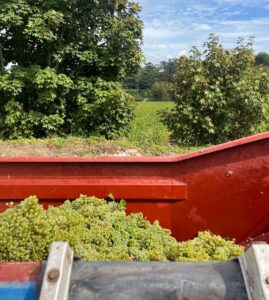
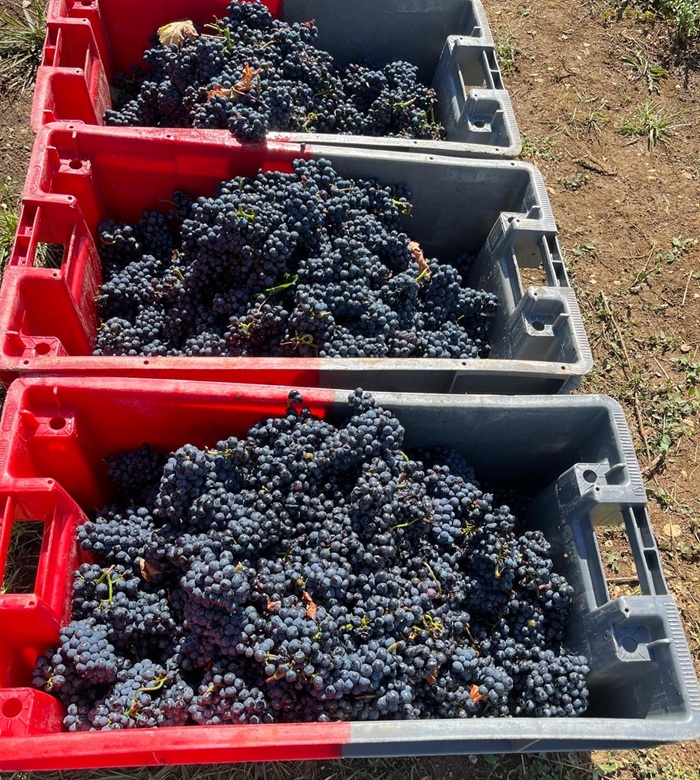
Hand-picking offers the great advantage of naturally building in a series of carefully considered selections, ensuring that virtually perfect grapes reach the presses. The grape-picker removes any bunches or parts of bunches that do not meet the quality standards; the row supervisor may carry out a quick additional sort before the bunches are sent to the winery; and finally, manual (or optical) sorting at the winery intake can remove any remaining imperfections.
Sorting plays a vital role in challenging or delicate vintages (uneven ripening, heavy rainfall, high incidence of rot, etc.). In particularly challenging vintages, the top estates can reject nearly half their crop! An exacting approach enables them to produce wines that are often very sound, wines that could have turned out disastrously without such meticulous sorting of the grapes at harvest.
Also on the iDealwine blog:
Everything you need to know about grape harvests