Beaujolais is an increasingly popular wine region with consumers, but what are the reasons for this? We’ll delve into theme here in our five-point guide.
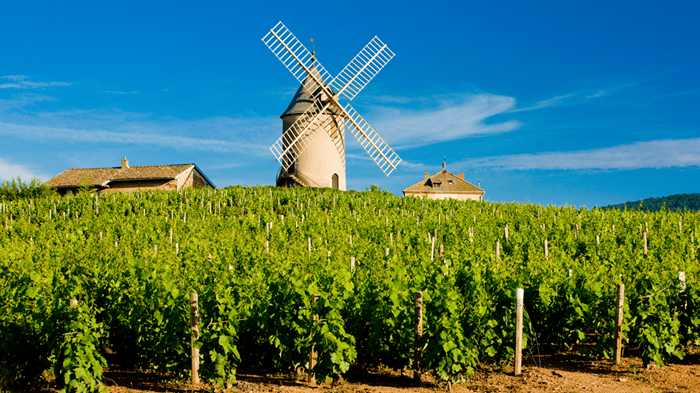
The Beaujolais region covers 13,500 hectares, comprising 12 appellations, including the ten Beaujolais crus – Brouilly, Chénas, Chiroubles, Côte de Brouilly, Fleurie, Juliénas, Morgon, Moulin-à-Vent, Régnié and Saint-Amour – as well as the Beaujolais and Beaujolais Villages AOPs. Gamay vines account for 97% of the vineyard, for the production of rosé and red wines. As for white wines, Chardonnay is the only authorised grape variety.
1. Unique terroirs
The region boasts a diverse range of unique terroirs. In fact, some 300 different soil types have been identified. Moulin-à-Vent is home to pink granite arena, while Morgon has granite schist, influenced by the volcanic terroir of Côte de Py, and Chiroubles only granite rock. Alluvium, bluestone and sandy soils can also be found in other crus. Each soil type influences the character of the wines produced, developing different nuances at tasting. Beaujolais is a region capable of producing great, complex wines that, in the case of the crus, can be laid down for well over a decade.
2. A signature winemaking method
Carbonic maceration is a veritable signature of Beaujolais winemaking. Other regions, like Alsace and Burgundy, use the technique, too, but only to a small extent. The aim of the method is to extract aromatic compounds, colour and tannins through intracellular fermentation (i.e. where the sugars convert to alcohol inside the berries). The grapes are fermented in whole bunches without crushing or destemming, to keep them intact until they burst and the fermented juice flows out. The resulting wines are aromatic and low in tannins. This technique of winemaking is best known for producing the famous Beaujolais Nouveau, released on the third Thursday in November each year.
3. A response to consumer expectations
Beaujolais wines meet current consumer demand for red wines. Indeed, the current taste is for fruity red wines with little extraction, a lighter colour and that can be drunk on their own without food. There is also demand for more gastronomic wines and the Beaujolais crus are a good fit here. Although few wine drinkers lay down their Beaujolais crus in the cellar for several years, it is with time that these Gamay wines reveal their full potential and surprise wine lovers. Some crus, such as Moulin-à-Vent, are renowned for producing wines which, over time, develop a Pinot Noir character. It’s hardly surprising, then, that some Burgundian winemakers, such as Thibault Liger-Belair, own vines in the Beaujolais region!
The annual International Gamay competition rewards the Best Gamay in the World. In 2025, the prize once again went to a Beaujolais (for the 10th consecutive time) – Relais du Colombier’s 2023 Beaujolais Villages Cuvée du Relais.
White and sparkling Beaujolais are still less well-known and although not necessarily a go-to for consumers, these styles are growing in demand. In fact, Chardonnay can produce fine wines on the appellation’s great terroirs and while it represents only a slight proportion of wine produced in the Beaujolais region, it is of great interest to winemakers and wine lovers alike. There are plenty of examples of Chardonnay with a taste profile similar to its Burgundy cousin, but at a more affordable price.
4. Excellent “natural” winegrowers
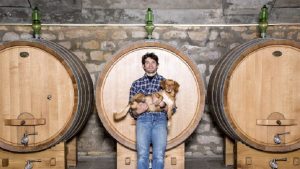
The Beaujolais region boasts a large number of winemakers producing natural wines. The chemist, wine négociant and winemaker Jules Chauvet, who died in 1989, was the region’s founding father of natural wine. Today, the list of natural winemakers is long, but Yvon Métras, Jean Foillard and Marcel Lapierre are a few examples. These winegrowers are committed to environmentally friendly approaches, in particular the use of biodynamic treatments and ancestral practices such as working the vineyard with horses. They also set themselves apart by being the first in Beaujolais and in France to offer wines with little or no added sulphites. The work of estates like Domaine Thillardon, Château Thivin, Séléné and Robert Denogent are also playing a key role in bringing Beaujolais’ appellations to the fore. Historic, established estates and the new generation thus cohabit to offer wines reflecting the diversity of the Beaujolais terroirs.
5. Reasonable prices
Last but not least, Beaujolais is a region that produces wines at very attractive prices. One very clear indicator is the iDealwine Barometer of auction results. Throughout 2025, the wines auctioned from the region generated an average price of €44 per bottle (compared with an average of €137 for France as a whole). In more specific terms, you can find good Beaujolais and Beaujolais Village appellation wines for prices ranging from €10 to €20. Some good or even very good Beaujolais crus can be bought on the iDealwine website for around €10 and rarely exceed €30 (Damien Coquelet, Georges Descombes, and Jean-Marc Burgaud are a few such names). The only exceptions are the most renowned and premium quality estates, where prices can reach €40 per bottle. Only one wine fetches prices well in excess of that – the legendary Morgon 3.14 from Domaine Jean Foillard, which produces a wine on the Côte de Py that enthusiasts battle to snatch up for over a hundred euros! This just goes to show this region is of great interest to some enthusiasts.
Also read on the iDealwine blog:
Beaujolais’ Fleurie and Morgon appellations, a quick guide
Domain Jean Foillard | Natural Morgon wines and the best of the Beaujolais
Marcel Lapierre: The pioneer of natural wines in the Beaujolais