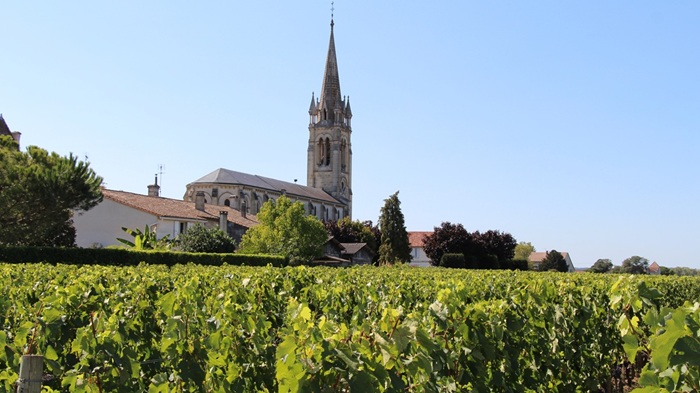
We kick off our 2025 En Primeur tastings on Bordeaux’s Right Bank. So without further ado, let’s head to the Saint-Émilion and Pomerol appellations!
The 2025 vintage: Overview of weather conditions
Following a challenging 2024 vintage, Bordeaux enjoyed a particularly favourable growing season in 2025. A mild, largely dry winter ensured well-timed budburst, avoiding the main risks associated with spring frost. Favourable spring conditions – warm, sunny and with limited rainfall – encouraged rapid, even flowering while keeping disease pressure low. The summer was warm and dry without excess, gradually establishing water stress that concentrated the berries while naturally curbing vine vigour ahead of véraison.
Timely rainfall at key moments helped preserve freshness and balance, avoiding the excesses often seen in hotter vintages. Harvest took place early, under ideal conditions, allowing for considerable flexibility in picking dates, with fruit that was both perfectly ripe and healthy. Despite low volumes, 2025 is shaping up to be a truly great Bordeaux vintage.
Read our dedicated article to find out more about the 2025 vintage characteristics.
2025 Right Bank wines: Quality and characteristics
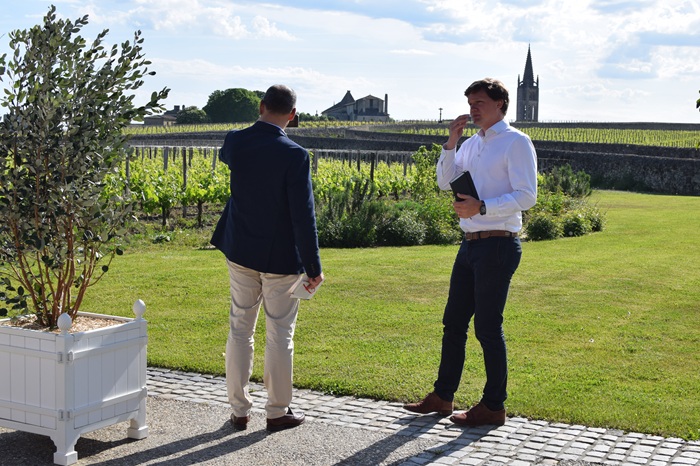
In Saint-Émilion, the vintage followed the same warm, dry pattern seen across the Bordeaux region. Rainfall across the appellation during the vine’s dormant period (November to March) was 41.2% below the 30-year average. From budbreak through to harvest, precipitation remained very limited, totalling just 311 mm over the period (–23.2%).
As a result, yields varied significantly between estates. Some châteaux remained within average levels, such as Canon (40 hl/ha) and Berliquet (42 hl/ha), while others saw yields reduced, sometimes markedly, including Rauzan-Ségla (29 hl/ha), Figeac (25 hl/ha) and Cheval Blanc (17 hl/ha, a historic low). Overall, average yields in the Saint-Émilion Grand Cru appellation came in at 34.7 hl/ha.
The Pomerol appellation experienced similarly dry conditions, with almost three consecutive months without rainfall. On the plateau, a number of properties recorded temperatures exceeding 50°C at the height of summer. Fortunately, the appellation’s deep clay soils, offering excellent water retention, helped vines withstand these extremes until much-needed rainfall finally arrived at the end of August. Yields were heavily impacted, with an average of 25.9 hl/ha across the appellation, representing a 29.2% decrease compared to the ten-year average. The wines are generally more powerful than those from Saint-Émilion, with higher alcohol levels.
Overall, producers have largely succeeded in preserving freshness, with varying alcohol levels ranging from 12.5% to 14.5%. Tannin levels are particularly high, but despite their abundance, they are often very well integrated. In the cellar, producers have clearly sought to preserve as much freshness as possible, favouring slightly shorter vatting periods, gentle extraction and lower fermentation temperatures.
The team’s opinion
The team was particularly impressed by Saint-Émilion wines this year, resulting in a large number of standout favourites.
Saint-Émilion
- Château Cheval Blanc: Blend: 51% Merlot, 45% Cabernet Franc, 4% Cabernet Sauvignon. Alcohol: 12.7% | pH: 3.76 | Yield: 17 hl/ha
The nose is floral, with peony notes lifted by fresh hints of eucalyptus. On the palate, the wine shows impressive substance, both dense and concentrated, with abundant yet finely textured tannins that are already well integrated. Freshness also contributes to the wine’s balance, carrying through to a long, sustained finish.
- Château Figeac: Blend: 38% Merlot, 30% Cabernet Franc, 32% Cabernet Sauvignon. Alcohol: 13% | pH: 3.64 | Yield: 25 hl/ha
The nose is expressive and intense, revealing aromas of red and black fruit, alongside floral and spiced notes, notably pepper. On the palate, tannins are present and powerful, supporting a dense substance. The wine is precise, finishing on a distinctive saline note.
- Château Canon: Blend: 78% Merlot and 24% Cabernet Franc. Alcohol: 14% | pH 3.5 | Yield: 40 hl/ha
The nose reveals red and black fruit, with subtle oak notes. The palate opens with a very gentle attack, unveiling a silky texture showing density and concentration. A distinctive limestone freshness underpins the wine, leading into a long finish where power builds gradually.
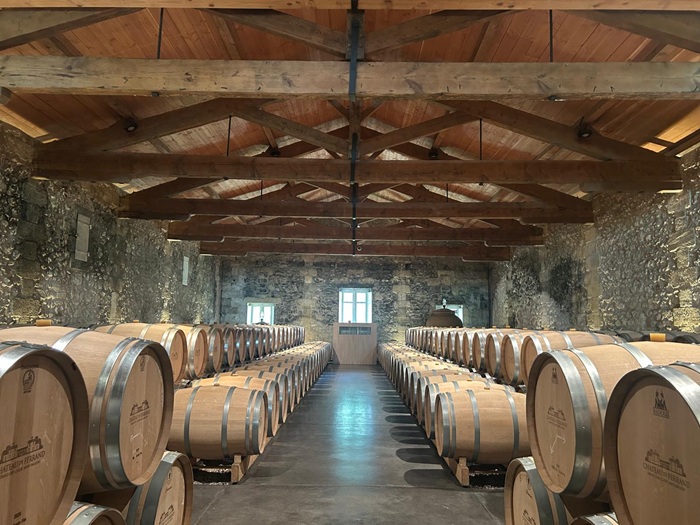
- Château de Ferrand: Blend: 71% Merlot and 29% Cabernet Franc.
Described by the estate as “the finest vintage ever produced here”, and on tasting, it is hard to disagree! The wine shows great finesse, with notes of black fruit, notably blackcurrant, alongside refined herbal nuances such as blackcurrant leaf and eucalyptus. The palate is juicy and flavoursome, with finely textured tannins.
- Pavie Macquin: Blend: 78% Merlot, 20% Cabernet Franc, 2% Cabernet Sauvignon.
The nose opens on fresh, mentholated notes of eucalyptus and tangy red fruit, notably redcurrant. The palate is harmonious, supple and intense, with excellent balance and finely textured tannins.
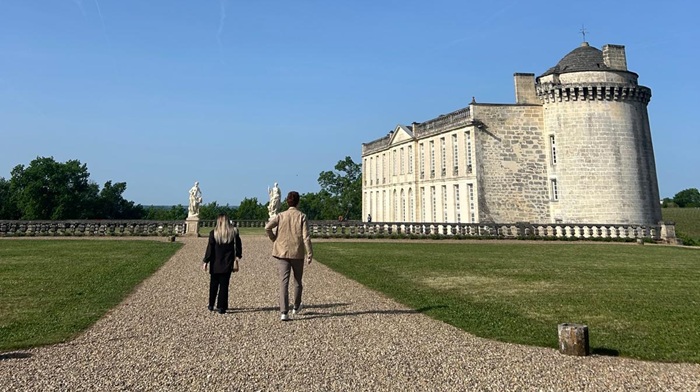
- Château Laroque: Blend: 99% Merlot, 1% Cabernet Franc.
On the nose, the wine shows black cherry, strawberry and violet, with a touch of vanilla and pepper. The palate is generous and fruit-driven, supported by excellent freshness and delicate tannins.
- Larcis Ducasse: Blend: 90% Merlot, 10% Cabernet Franc.
More restrained on the nose, with floral notes of violet alongside red and black fruit, with a hint of confit character. The palate is rich, with present yet delicate tannins, showing a fine balance between freshness and generosity.
- Clos Fourtet: Blend: 84% Merlot, 10% Cabernet Franc, 6% Cabernet Sauvignon.
Subtle on the nose, this Saint-Émilion reveals notes of rose and violet. On the palate, velvety tannins support a wine of notable freshness and generosity, with flavours of wild strawberry, red cherry and redcurrant. So elegant, it almost brings to mind a fine Côte de Nuits from Burgundy.
Pomerol
- Château La Conseillante: Blend: 87% Merlot, 10% Cabernet Franc, 3% Cabernet Sauvignon (making a return to the blend after 70 years)
Alcohol: 13.5% | pH: 3.66 | Yield: 30 hl/ha
The nose is particularly refined, with subtle floral notes of violet alongside blueberry. The palate delivers great freshness and striking energy, with a refined, beautifully poised texture that is almost ethereal. The finish is long, carried throughout by that same freshness.
- La Pointe: Blend: 88% Merlot, 12% Cabernet Franc.
The nose is generous and expressive, bursting with red fruit aromas of redcurrant, cherry and strawberry, with a light touch of vanilla. The palate is juicy, with delicate tannins and a fine balance between structure and finesse.