The Loire Valley offers such a wide range of distinctive red and white wines that food and wine pairing options can sometimes seem endless. Here ia an overview of the basics and our favourite pairing ideas for wines crafted from grapes grown in the region such as Cabernet Franc.
Red wines
Most red wines from the Loire Valley appellations of Saumur-Champigny, Chinon, Bourgueil, Saint-Nicolas de Bourgueil and Anjou are produced with Cabernet Franc. This grape variety, also widely used in Bordeaux’s Saint-Emilion, produces rather tannic (less so than Cabernet Sauvignon) and pleasantly fruity wines. The Loire also produces some Pinot Noir, particularly in Sancerre.
Lighter cuvées of Cabernet Franc, generally produced on light soils of gravel or sand, at the bottom of slopes and close to rivers, create wines with crunchy fruit and light tannins. These go well with aperitif selections like a charcuterie board, especially when uncorked young (1-4 years after harvest) to enjoy the fruit aspect of the wine. Most Sancerre reds fit into this category.
More ambitious reds, from well-exposed hillsides, offer wines with a wider range of food pairing options. This holds particularly true for several estates in Saumur-Champigny, Chinon and Bourgueil. These fuller-bodied wines, often matured in barrels, have tannins perfectly made for pairing with hearty red meats, lamb stew or meat cooked in sauce.
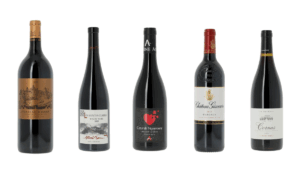
The finest Loire Cabernet Franc cuvées are among the greatest reds in the world, and they can age as well as top Bordeaux or Burgundy wines. In Saumur-Champigny, Les Poyeux and Le Bourg from Clos Rougeard are fine examples. From Chinon, we love Clos de la Dioterie and Clos du Chêne Vert from Charles Joguet and Coteau de Noiré from Philippe Alliet. From Bourgueil, Pierre and Catherine Breton‘s Les Perrières is a stellar example. All of these wines should be opened when at least five or six years old, and, when from the best vintages, they can hold on for a good 20 years! After around a decade, they can be enjoyed with some of the tastiest dishes in French cuisine, such as poultry with truffles, game, venison and hare à la Royale.
White wines
Apart from Sauvignon Blanc for white Sancerres, differences between the Loire’s white wines don’t occur because of differences in grape variety (there’s only the one, Chenin Blanc) but essentially because of variations in the sweetness of cuvées, a little like in Alsace. Incidentally, the wines also present slightly different characteristics depending on the terroir in which they’re produced. In the west (like from the Anjou area), on heavier soils, the wines are generally fatter and more full-bodied, whereas the often limestone-dominant terroirs to the east (in places like Vouvray, Montlouis and Saumur) produce more mineral, direct wines. The former go very well with rich foods (think cream and sauces), while the latter are at ease with ‘simpler’ foods (grilled fish, white meats or roasted poultry, and goat’s cheese).
Dry Chenin is a marvel at the dinner table, exuding many aromas without overpowering character (very aromatic wines can be hard to pair). Its notes of quince, lime tree and honey pair well with tasty dishes of fish or white meat in creamy sauce. The freshness of its acidity goes perfectly with the grilled skin of chicken or spiced foods (for instance a tajine), especially if the wine has a touch of residual sugar or if it’s from Anjou, with a richer, fatter texture.
Vibrant, fruity and mineral Sancerre, if matured in vats (which is the case for the majority of Sancerre) are ideal for seafood (oysters) and goat’s cheeses (especially dry cheeses). Cru Sancerres (Clos de Beaujeu, Monts Damnés, Romains, etc.), generally matured in oak, on the other hand, shouldn’t be uncorked with seafood, but rather slightly creamy fish or white meats, delicately spiced foods like curry.
Demi-sec Chenin (essentially Vouvray and Montlouis) go well with spicy foods, too (particularly Thai cuisine or salty/sweet tagines). They can also go well with a dessert, for instance apple pie.
The great sweet wines of the Loire (Coteaux du Layon, Quarts-de-Chaume, Bonnezeaux, Vouvray, Montlouis) generally acheive a superlative balance between a high amount of residual sugars and an acidity that would undoubtedly seem too sharp without the sweetness. The balance is sometimes so magical that these wines can be sipping wines to be enjoyed in the own right. Those with slightly less sugar can be opened with roast capon, foie gras or blue-veined cheeses. Denser wines are a joy alongside an apple dessert.
Fizz
The appellations of Montlouis and Vouvray produce several sparkling cuvées, whether they are pét-nats (natural wines without the addition of liqueur) or traditional method sparkling wines. Generally speaking, they are wines to serve with apératifs rather than made for sophisticated foods, though there are some exceptions. These include Huet and Clos Naudin in Vouvray and La Taille aux Loups and François Chidaine in Montlouis. Their delicacy and lightness make them good aperitif wines as they don’t overwhelm the palate before a meal, but they can also be enjoyed with paté, smoked salmon, cured meats and oysters.