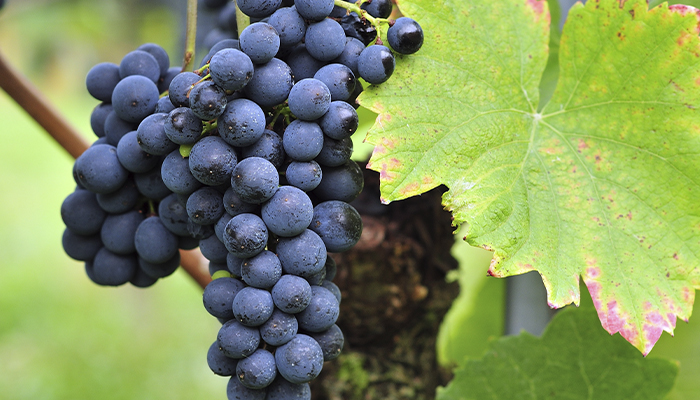
Today we are focusing in on the grape variety Pinot Noir. It is one of the oldest in the world, and although originally native to Burgundy, it has spread over time as a result of population movements. Today found around the world, on six continents, where it prefers vineyards with cool, temperate climates, it is a grape that deserves winelovers’ full attention.
Pinot Noir, the superstar Burgundy grape
Pinot noir, what a story! Considered to be the father of almost all existing red grape varieties, Pinot Noir – from the Noirien family – is in fact one of the oldest of all varieties. The ampelographer Louis Levadoux asserted that it was originally nothing more than a domesticated wild vine, making it a direct descendant of Vitis vinifera.
Whatever the case, we can virtually be certain that Pinot Noir was already being cultivated by the Gauls at the time of the Roman invasion, and that it originated in Burgundy. It became the signature red variety of this region in 1395, when Duke Philip II “the bold” of Burgundy simply banned Gamay, grown by many farmers at the time for its yields, and promoted Pinot Noir instead, deeming it a higher quality and more complex grape. And so it became the undisputed star red grape variety of Burgundy, producing the wines of the finest appellations (whose prices set the highest auction records), like Corton, Musigny, and Romanée-Conti.
Some 51% of the vines planted in Burgundy are Chardonnay, but Pinot Noir still accounts for an impressive 39.5%. The rest is made up of Gamay (known for its resistant character), Aligoté (which is currently in-vogue) and other minority varieties.
A grape that is conquering the world
Exploring Pinot Noir is also a way of understanding the development of the world’s vineyards, since the variety has quite simply spread all over the world, on six continents. It is also made as a white wine – without macerating the skins which give the juice its pretty ruby colour – particularly in Champagne. Although Pinot Noir is demanding in some respects – for example, it likes cool, temperate climates – it has a real facility for genetic mutation, allowing it to evolve easily according to the location. Nonetheless, it is a rather capricious and tricky to grow grape as it is rather sensitive to disease.
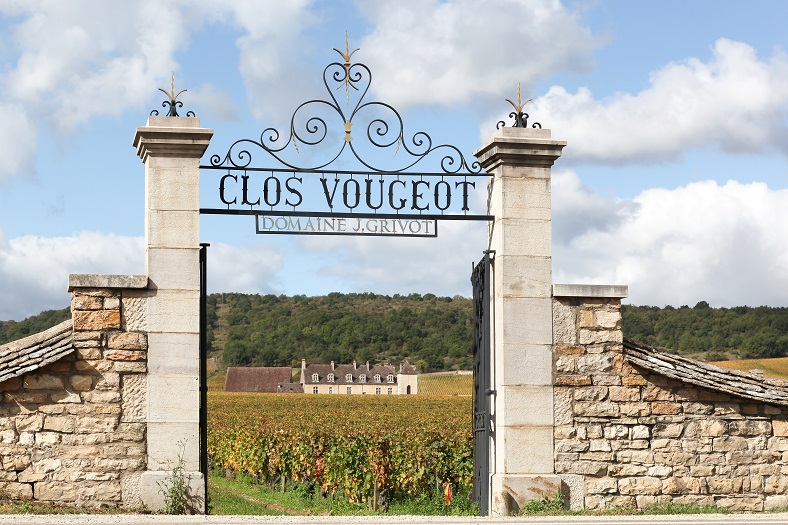
Pinot Noir owes its international success to its distinctive characteristics, including its finesse, its lovely fruitiness, its complexity and its good ageing potential resulting from high acidity. Let’s take a brief look at its aromas and tasting characteristics to understand why. Pinot Noir is typically medium in colour, or even sometimes fairly pale. The youngest wines express notes of red fruit, particularly strawberry and cherry, gaining in complexity depending on the appellation and age. Its fruity notes evolve as time goes by. Notes of kirsch appear, as well as floral notes often hinting at violet, rose or peony, and notes of delicate spices (cinnamon, pepper). The tannins are always very fine, sometimes verging on ‘juicy’, and the body light. With a little ageing, the wines show a very refined bouquet, releasing subtle aromas of game, leather, spices and undergrowth.
Pinot Noir conquers Europe
Pinot Noir is grown mainly in the north-east of France (Burgundy, Jura, Champagne and Alsace), but also thrives in other European countries such as Germany, Austria, Switzerland and Italy. It was the medieval Cistercian monks in particular who were responsible for its expansion. Germany is said to be the world’s third largest producer of Pinot Noir, thanks in particular to the Baden and Mosel-Saar regions. Here, it goes by the names “Spätburgunder”, meaning ‘late Burgundian’, or sometimes “Blauburgunder”, meaning ‘blue Burgundian’. Don’t miss the chance to taste the wines of famous winemaker Markus Molitor, and especially his Trarbacher Schlossberg, a fruity and charming wine. In Austria, Pinot Noir is called also called “schwarzer Burgunder” (again in reference to its Burgundian origins) and produces more intense fine wines. As for Switzerland, this red starlet has dethroned Chasselas to become the country’s most widely planted grape variety, particularly in the Valais. It can also be found in the north of Italy, particularly in the Langhe region.
On to the Americas
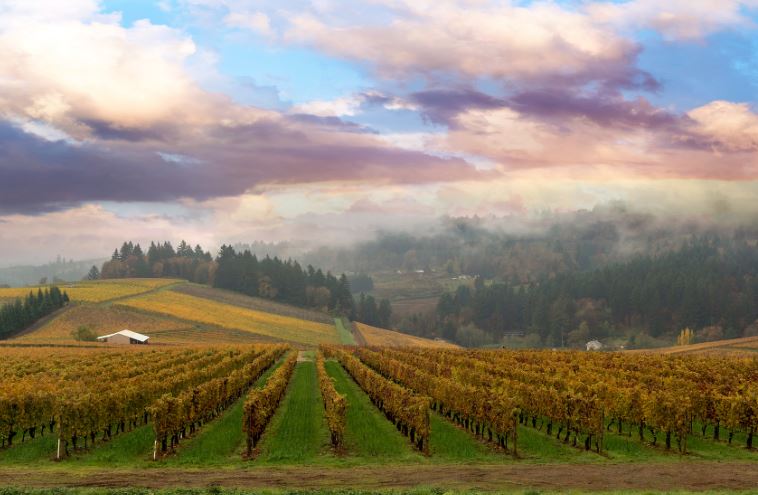
Pinot Noir quickly developed in North America, particularly in the United States, where settlers imported European Vitis vinifera vines. Oregon is where the variety is most widely planted – the region is often referred to as the “Burgundy of America” – as the climate is cooler than in California, where it also increasingly grown (especially on the Sonoma Coast and in Santa Barbara County), alongside Chardonnay. It is also found in Washington State, particularly in the Columbia Valley. Several of these wines feature on iDealwine, such as the Oregon Pinot Noir from Cristom Vineyards or Rajat Parr. From Sonoma, you’ll find very elegant Pinot Noir from the Littorai or Kistler estates.
In South America, the variety can be found in Chile, particularly in the Casablanca and San Antonio valleys.
Oceania, the promised land
As in America, winegrowing in Australia and New Zealand developed due to European colonisation. The first vines in Australia were planted in the 17th century in New South Wales, but it was mainly the Scotsman James Busby who helped Australian winegrowing to take off by importing European grape varieties. Today, three regions produce most of the country’s precious Pinot Noir wines – the Mornington Peninsula, Tasmania and the Yarra Valley. Elsewhere, temperatures are too high.
In New Zealand, the story is much the same. In 1838, Bishop Pompallier, a French missionary, introduced French varieties to New Zealand. Other bishops rapidly followed suit, notably in the Hawke’s Bay region. Two regions on the islands of New Zealand have become truly famed for Pinot Noir, Central Otago and Marlborough, which produce completely different wines. See for yourself with this iDealwine selection from Central Otago, including the famous Cloudy Bay estate, now owned by the French group LVMH, and the Felton Road estate. From the Marlborough region, discover the Greywacke estate’s Pinot Noir, a wine full of delicious flavour and freshness, to be drunk young. You can also enjoy a taste of the Canterbury wine region by trying the Bell Hill Estate’s wine.
Africa | From European Pinot Noir to South African Pinotage
Pinot Noir has a special history on the African continent, having been grown in South Africa since its colonisation. In 1659, Dutch settlers began growing mainly Muscat grapes. In 1688, French Huguenots brought their winemaking techniques to the region, helping to develop the practice of winegrowing. Although Pinot Noir is grown here in its own right, you’ll also find a local cross between Pinot Noir and Cinsault, called Pinotage, which is unique to South Africa having developed because of the country’s history of apartheid. Indeed, in 1948, local producers found themselves in a state of virtual autarky, cut off from any link with an external market and with European winegrowing know-how and winemaking techniques. It was at this point that they revealed their own identity in terms of viticulture, using specific yeasts, techniques and above all the famous Pinotage, now unique in the world. Be sure to try the Pinotage wines from the Beaumont family and Kanonkop on iDealwine.
Asia
Although Pinot Noir’s conquest of Asia is still in its infancy, we are certain that this precious grape variety will one day be more widely planted there and find terroirs that are both cool and temperate enough for it to develop. While Bordeaux grape varieties are beginning to make inroads in China (with wines like Ao Yun and Xiaoling’s Cizhong), Pinot Noir is also making timid progress, particularly in the Shihezi, Xinjiang and Ningxia regions. It has a great future ahead of it, not to mention, incidentally, that China sent Pinot Noir vines into orbit in 2016 … so watch this space!
See all Pinot Noir wines for sale on iDealwine