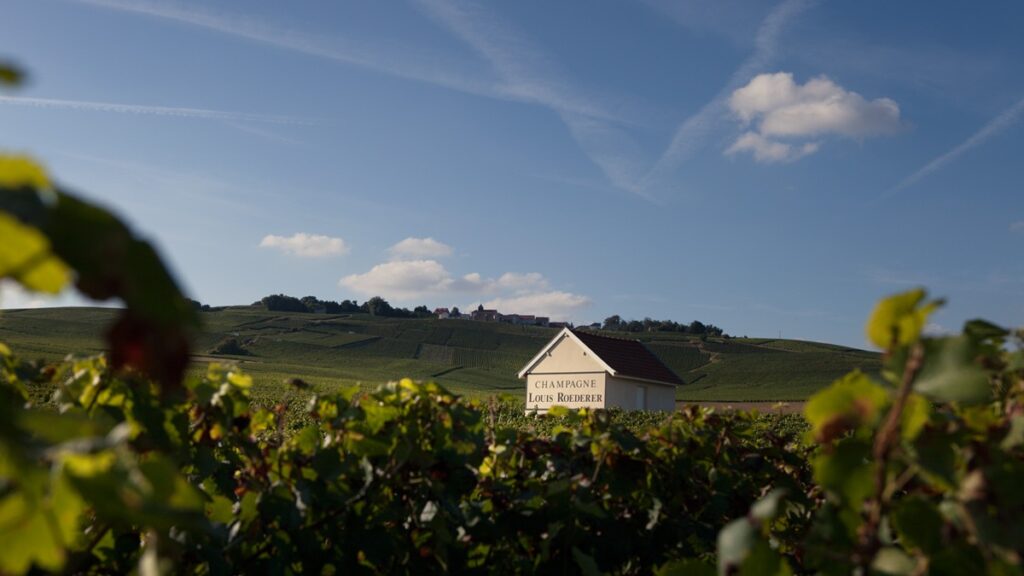
After Champagne, Bordeaux, the Rhône Valley and Provence, not to mention Portugal and California, the Roederer Group makes its first move into Burgundy with the acquisition of Domaine Pierre Damoy, an iconic Côte de Nuits estate.
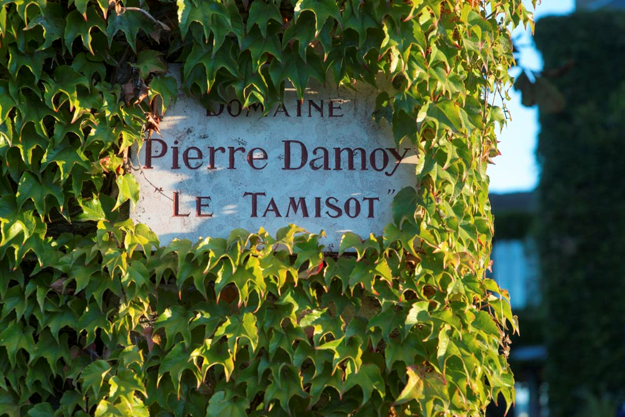
In April 2026, the Roederer Group announced it had entered into exclusive negotiations to acquire Domaine Pierre Damoy. As of 24 July, with the acquisition formally completed, an estate with outstanding viticultural heritage has joined the portfolio operated by the group’s wine division, Roederer Collection. Julien Damoy, the son of a grocer from Yvetot in Normandy, moved to Paris to develop the family business, which he built into a small empire, employing up to 2,400 people in 1936 at its peak. Passionate about wine, Julien Damoy also set about buying up vines at a time when the ravages of phylloxera had sent the price of vineyard plots tumbling. Over the course of the 1920s, he gradually acquired vineyard holdings in Gevrey-Chambertin, together with a substantial holding in the Chapelle-Chambertin Grand Cru (2.22 hectares) and a few rows in Chambertin (0.48 ha). The estate becomes the principal owner of Chambertin Clos de Bèze, owning more than one-third of its total area (5.36 ha). In 1936, Clos Tamisot joined the estate and remains a 1.45-hectare monopole (vineyard under single ownership). To complete the story of the estate’s background, Julien Damoy had also acquired vineyards in the Médoc (Château La Tour de By) and in Beaujolais (Château du Moulin à Vent), to keep his Paris shops supplied. The two properties have since been sold off.
Domaine Pierre Damoy
Julien Damoy, a farmer’s son, founded a flourishing greengrocer’s shop in the 1930s, which reached its heights in 1936. A passionate wine enthusiast, he made the bold choice to buy a few hectares of vines during the phylloxera crisis. A visionary gamble, it was the start of a family adventure that continues today with Pierre Damoy, representing the fifth generation of winemakers.
Located at the heart of the Côte de Nuits, the estate covers about eight hectares of exceptional vineyards in Gevrey-Chambertin with prestigious grand crus such as Chapelle-Chambertin, Chambertin and Chambertin Clos-de-Bèze. Following the same precise approach all these years, Pierre Damoy favours quality over quantity. The old vines (most were planted in the 1920s) reveal the depth of the terroirs where they grow. In the winery, this philosophy translates to long vatting and a marked maturation with the percentage of new barrels reaching 80% for Clos-de-Bèze wines, giving them structure, intensity and good ageing potential.
Necessary compromises
To curb the concentration of vineyard land, prior authorisation from the prefecture (the equivalent of a county hall in France) has been required before acquiring more than 40% of a winegrowing business since 2021. The Roederer Group, already the owner of substantial vine holdings, was a natural fit for this framework. To meet prefectural requirements, Roederer has, according to Challenges magazine, pledged to rent out certain vineyard parcels in Burgundy, backed by the Confederation of Burgundy Appellations and Winegrowers, as well as in the other regions where the group is established.
A family-owned group with 250 years of history
It’s fair to say that, with this bold move into Burgundy, Frédéric Rouzaud, at the helm of the family-owned group, celebrates the 250th anniversary of the Champagne house founded by his forebears. Founded in Reims in 1776, this house, which took the name Louis Roederer in 1883, has remained family-owned and independent ever since. Their journey mirrors the course of History. It will be marked by the 150th anniversary of the Cristal cuvée, originally created for Tsar Alexander II of Russia.
Frédéric Rouzaud is the seventh generation at the helm of a group. Through his work, he has helped to expand its vineyard holdings, by purchasing vineyards to secure the house’s grape supply in Champagne and the acquisition of estates that are iconic in their respective regions. Brought together under the Roederer Collection banner, the portfolio now spans 1,150 hectares, including two Champagne houses (Roederer and Deutz), the Domaines Ott in Provence (Château de Selle, Clos Mireille and Château Romassan), and Maison Delas in the Loire Valley, along with the Bordeaux châteaux Pichon Lalande and de Pez. Internationally, the group owns Ramos Pinto and several Californian estates (Scharffenberger Cellars, Domaine Anderson, Merry Edwards Winery, and Diamond Creek Vineyards), not to mention the Roederer Estate, founded in 1982 by Jean-Claude Rouzaud, Frédéric’s father, to expand the group’s range of sparkling wines.
Shop all Louis Roederer wines