One of Bordeaux’s flagship grape varieties, Cabernet Sauvignon is also one of the most widely planted in the world. It produces some of the finest age-worthy red wines, including the renowned Pauillacs from Mouton Rothschild and Latour. Cabernet Sauvignon’s origins have long been disputed, but a recent study carried out at the University of Davis in California established it as a cross between Cabernet Franc and Sauvignon Blanc.
From the Médoc to Margaret River
Known under many different guises, from Marchoupet and Carbonet to, Bidure, Cabernet Sauvignon was also referred to as Vidure as early as the 18th century. The final of its names is the term used in Montesquieu’s ‘Mémoire sur la culture de la vigne’ (published in 1783). It was around this time that the name ‘Cabernet Sauvignon’ first began to appear in written records. The variety produces wines of notable tannic structure and aromatic intensity, both of which develop further with age.
While Médoc (Pauillac in particular) and Graves remain its historic strongholds, it has gradually spread to Bordeaux’ Right Bank, though to a lesser extent, where it remains well behind Cabernet Franc and Merlot. Today, Bordeaux accounts for 60% of all Cabernet Sauvignon plantings in France. It is also found in the South-West (Bergerac and Buzet), the Loire Valley, Languedoc-Roussillon and Provence. Cabernet Sauvignon is also planted across much of the world, notably in Tuscany – where, blended with Sangiovese, it gave rise to the ‘Super Tuscans’ – as well as in California, Australia, South Africa and across South America.
Sun and gravel
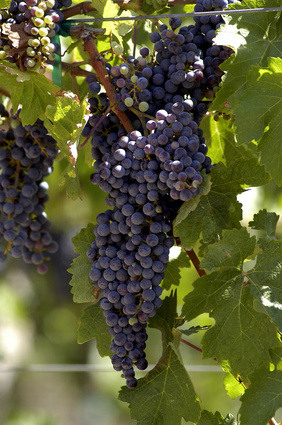
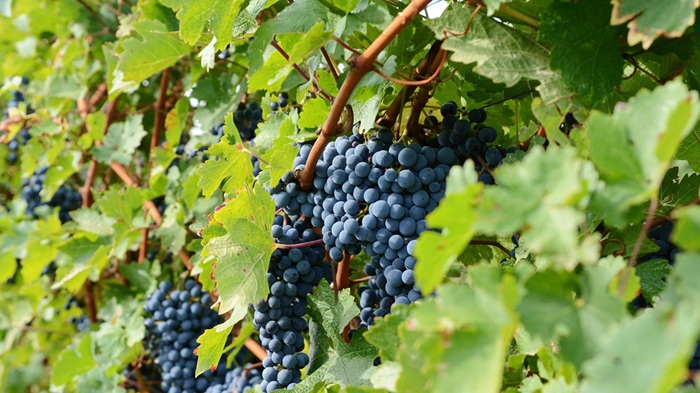
Its bunches are medium-sized and elongated, with tightly packed berries, thick, tough skins and a deep blue-black colour. Their flesh is firm and crisp, producing a dense, moderately sweet juice. Wines from this variety are known for their capsicum notes, red pepper when fully ripe and often green when picked too early, along with vegetal notes, which the finest examples avoid, and a fresh, mentholated finish, particularly characteristic of Pauillac.
Cabernet Sauvignon is a late-ripening variety that requires warmth and plenty of sunshine, with soils playing an equally important role. In Bordeaux, it shows a clear affinity with gravelly soils; Médoc and Pessac-Léognan, on the Left Bank of the estuary, are two appellations where Cabernet Sauvignon thrives. During vinification, it benefits from a good supply of oxygen, linked to its high tannin content.
It can be vinified as a single varietal wine or blended, most notably with Cabernet Franc, Merlot, Syrah, Tempranillo or Sangiovese. Generally, it responds very well to extended ageing in oak barrels, its firm tannins requiring time to soften and integrate.
Cabernet Sauvignon around the world
The flavour profile of Cabernet Sauvignon varies considerably depending on where it is grown. In cooler climates, such as Bordeaux, Chile’s coastal regions and parts of South Africa, it tends to produce structured, fresh wines with pronounced acidity and aromas of blackcurrant, blackberry, cedar, graphite, mint and sometimes green pepper. In warmer regions, such as California, Australia and parts of Italy, the fruit is generally riper and more generous, with notes of black plum, blackberry, black cherry, liquorice and dark chocolate. The wines are often fuller-bodied, with rounder tannins and a richer texture.
Oak ageing can add further layers of flavour, including vanilla, toast, spice, tobacco and cigar box. With age, the powerful tannins soften and the wine develops more complex aromas of dried fruit, leather, forest floor, cedar and earthy spices. Whether bottled as a single-varietal wine or blended with Merlot, Cabernet Franc, Sangiovese or other grapes, Cabernet Sauvignon is renowned for its depth, concentration and excellent ageing potential, as highlighted in this article’s overview of its origins, growing conditions and winemaking characteristics.
What food to pair with Cabernet Sauvignon?
Thanks to its structure, acidity and firm tannins, Cabernet Sauvignon is a natural partner for rich, savoury dishes. It works particularly well with grilled or roasted beef, prime rib, lamb, venison and other game meats. The smoky, charred flavours of barbecued meat complement the wine’s dark fruit and oak notes, while the protein helps soften its tannins.
Cabernet Sauvignon can also be served with slow-cooked or braised dishes, such as beef stew, roast shoulder of lamb or an intensely flavoured mushroom casserole. More mature examples are especially well suited to dishes featuring truffles, wild mushrooms, herbs or earthy sauces. For a cheese pairing, choose hard, well-aged cheeses such as Comté, mature Cheddar, Gouda or Parmesan.
Young Cabernet Sauvignons are best enjoyed with hearty, richly flavoured dishes, while older bottles can accompany more refined preparations. The wine is generally less suited to delicate fish, light salads or very spicy foods, which may accentuate its tannins and make the wine seem harder. For the best balance, serve it slightly below room temperature, around 16°C to 18°C, and consider decanting a young, powerful bottle before serving.