The words “neither fined nor filtered” or “unfined and unfiltered” are often found on wine labels and in wine descriptions. But what does they mean? Let’s dive in.
Fining
Fining is a very old practice which have been used in winemaking since the time of the Roman Empire. It involves clarifying the wine (i.e. making it clearer) using a protein-based substance that coagulates when it comes into contact with tannins, trapping suspended particles that can then be removed during filtering. This step prepares and optimises the wine for filtration. Traditionally, fining was carried out using egg white, which is still used today in fresh, frozen, or powder forms. This type of fining is often included in the production methods for high-quality reds. But other options exist and they include bentonite clay (a vegan option for fining), isinglass (popular for white wines), casein (a milk protein), or gelatine.
Filtering
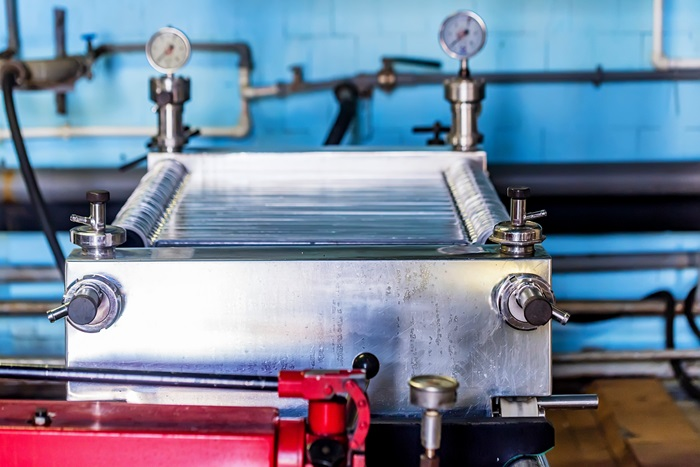
When filtering a wine, it passes through filters of varying levels of fineness to remove impurities and make it clearer. There are several types of filtration with the most popular ones being depth filtration, used to remove large particles, and surface filtration, used the remove the smaller particles through very fine sieves. Filters may consist of filtering earths, cardboard filter sheets or synthetic membranes.
Why fine and filter wine?
Why are these techniques used so often in the winemaking process? They are primarily implemented because most consumers value the clarity of the wines they drink. A slightly cloudy wine unsettles them; they get the impression it isn’t ready for consumption. The trouble with fining and filtration is that they are non-selective processes. They remove not only “dead” yeast cells and unwanted particles but also components that make a positive contribution to texture on the palate and to the wine’s taste.
Why not fine or filter?
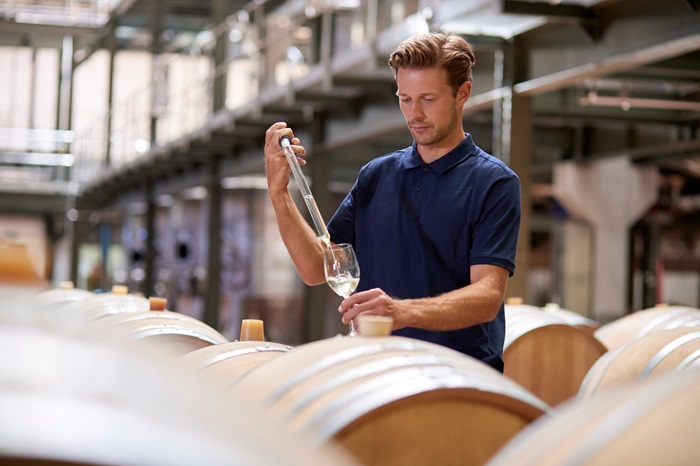
The decision not to filter or fine a wine is above all a quality-driven choice by the winemaker, who trusts their wine and does not wish to strip it of character simply to make it clearer. But the choice is also driven by technical considerations linked to the vinification process. A wine made quickly, without a long period of maturation, needs to be fined and/or filtered because its solids have not had time to settle naturally, thanks to gravity, to the bottom of the container it is in. This is not the case with a wine matured for a year or more in vat or barrel, since the lees (the dead yeast cells) and other solids will have had time to settle, meaning the winemaker can avoid filtering these wines before bottling. Instead, they can use racking, the process of transferring the wine from one container to another. And, of course, the winemaker can also adjust the fineness of their filtration to retain as many as possible of the most desirable suspended particles while eliminating the courser, unnecessary ones.
Two brief conclusions to bear in mind: first, the phrase “unfined and unfiltered” is generally a mark of quality since filtration and fining tend to diminish flavour and simplify a wine’s texture. The second is that a slight cloudiness isn’t necessarily a fault; the sublime red wines from Lalou Bize-Leroy (Domaine Leroy) are often cloudy, for example.
Also on the iDealwine blog:
Back to basics | How is wine made?