Let’s turn the spotlight on the Pessac-Léognan appellation, which performs remarkably well in 2025, with numerous favourites singled out by our team! Vintage analysis and tasting notes
As you’ve likely read in iDealwine articles and the press, the 2025 vintage is shaping up to be a clear success, once again living up to the almost magical reputation of Bordeaux’s ’5’ vintages. So how does this translate in Pessac-Léognan more specifically?
2025 Pessac Léognan wines: Quality and characteristics
Overall, 2025 benefited from favourable weather conditions in the context of climate change: a warm, dry and early vintage, yet without the wines showing the usual shortcomings sometimes associated with such sunny years.
All key stages of vine development – flowering, fruit set and véraison – unfolded smoothly and evenly. The paradox? A warm, dry vintage, yet wines offering freshness and moderate alcohol levels.
As across the Bordeaux region as a whole, the summer was generally warm and dry, punctuated by occasional heat waves, and yet the vines showed remarkable resilience and adaptability. Winegrowers succeeded in preserving a fine sense of freshness in their wines, reflected in low pH levels, alongside notably moderate alcohol levels, around 12.5%.
Several explanations have been put forward to explain this paradoxical profile:
- For some, as climate change progresses, the vines are developing a greater capacity to adapt to high temperatures.
- During the 2025 growing season, despite the heat and dryness, rainfall consistently arrived at key moments, helping to restart vine activity.
- During the sugar accumulation phase, heat placed the vines under stress, effectively pushing them into survival mode, which may explain why the berries did not accumulate excessive sugars, and therefore alcohol.
Harvests were particularly early: all white grapes were picked during August, a large proportion of them even during the first half of the month. Merlot followed in early September. Cabernet Sauvignon and Cabernet Franc came next, generally finishing towards the end of September.
It is worth noting that Pessac-Léognan’s terroir tends to respond relatively well to heat, particularly in plots with deep gravel soils over clay subsoils, as the highly draining nature of gravel helps regulate water availability and limit water stress.
The 2025 crop was therefore of high quality and in excellent condition, though volumes remained limited – slightly less so in Pessac-Léognan – for several reasons:
- Small berry size due to the weather conditions (a hot, dry summer prevented the grapes from soaking up water).
- The difficult weather conditions in 2024 impacted the 2025 vintage through floral induction (the physiological process by which a leaf bud develops into a flower bud).
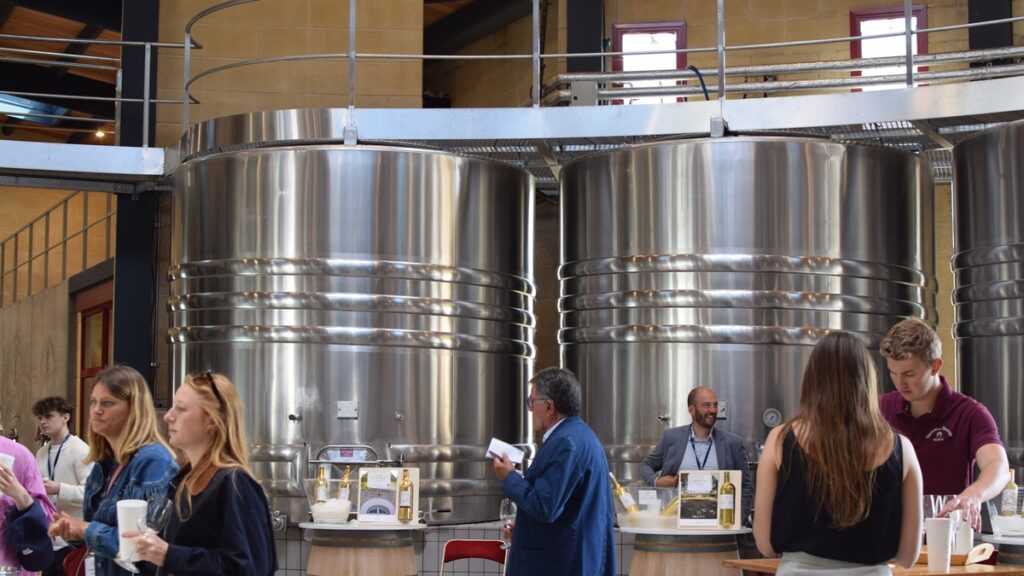
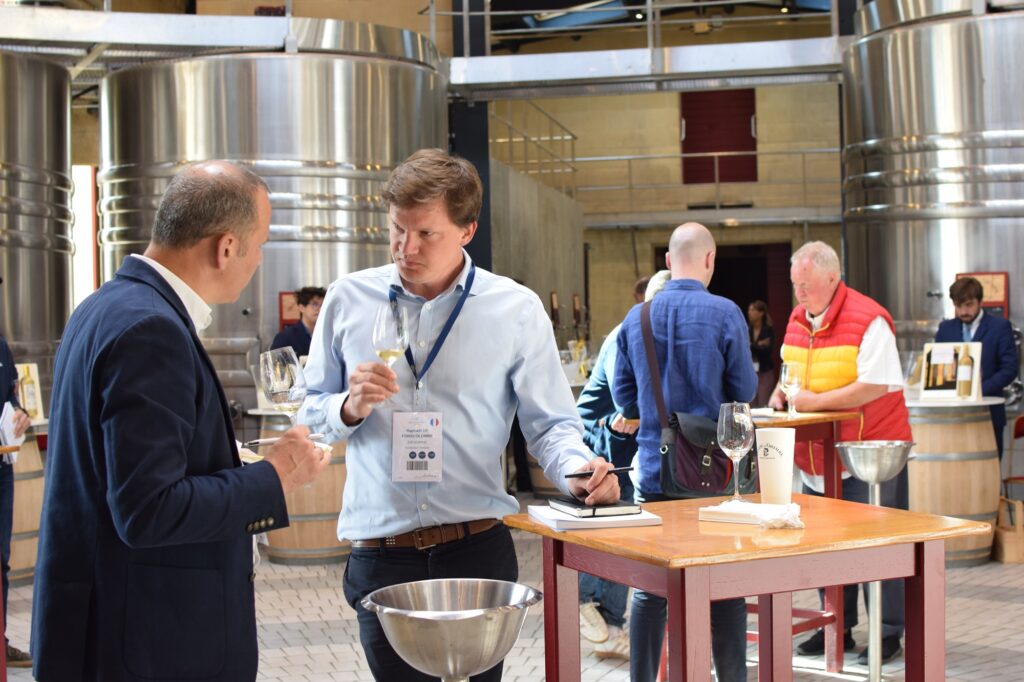
On tasting, Pessac-Léognan stands out as one of the appellations which performs particularly well, with whites that are fresh, elegant and lively, and reds that are both concentrated and fresh.
The iDealwine team’s 10 favourites in Pessac-Léognan
White wines
The nose is intense, with aromas of white fruit, white blossoms and grapefruit. On the palate, the texture is light and fluid, with an overall impression of elegance, sapidity, freshness and a very long finish marked by fine bitters.
The nose reveals citrus notes, Timut pepper and a distinct mineral edge. The palate stands out for its freshness, sapidity, density and length, with fine bitters on the finish.
The nose shows a distinctly mineral profile, with notes of flint and citrus. The palate is precise and fluid, with a precise, generous profile and marked freshness.
The nose is delicate, with aromas of white flowers and white fruit. The same aromatic profile carries through to a pure, light-textured palate, with a fresh, precise, generous and saline finish.
The nose is intensely aromatic, with notes of white fruit, white flowers and grapefruit. The palate is light and fluid, with a savoury edge and a long finish marked by fine, bitters.
Red wines
In the 2025 vintage, Les Carmes reaches a historic high proportion of Cabernet Franc (54%). The wine was vinified with 65% whole bunches.
On tasting, the attack is fresh and supple, leading into a fluid, airy texture with beautifully textured tannins. The wine shows excellent drinkability, with real depth, present yet powdery tannins and attractive fruit. The overall impression is precise and energetic, with a long, gentle finish. One of our standout favourites of the campaign.
An elegant nose, a complex bouquet of red fruits (raspberry, redcurrant, berries) and mineral notes (pencil lead). On the palate, the attack is full of finesse, and the caressing texture is structured by elegant tannins. No bitterness, lots of brightness and a finish of exquisite purity.
Made according to biodynamic principles and fermented with native yeasts – still relatively uncommon in Bordeaux – this wine shows a nose of red and black fruits, with distinctive inky notes. The palate is well balanced, with abundant yet finely structured tannins, a savoury edge, freshness and a long, fairly powerful finish.
The nose is delicate and well balanced, combining red fruit, notably burlat cherry, with hints of undergrowth and spice. On the palate, a fluid, generous texture unfolds with beautifully ripe fruit, leading into a long finish. A very elegant wine overall.
The wine shows aromas of red and black fruit, with subtle inky notes. On the palate, the texture is notably silky and fluid, with a fresh profile that extends into a long, gentle finish.
Also on the iDealwine blog:
2025 En Primeurs | Bordeaux, the allure of vintages ending in ‘5’