Chances are, you’ve bought a wine with the term “vieilles vignes“, or “old vines” in English, on the label. But when can a vineyard really be considered “old”?
A vine is not unlike a human being. When it is young, between four and eight years old, it has the charms of childhood and the wines are usually mild and full of freshness. Between eight and 14, it reaches adolescence: it grows in all directions and is difficult to control. The viticulturist needs to tame the vineyard to prevent it from producing weak grapes without personality.
After this phase, the vine enters maturity and becomes an adult. As it ages, the roots grow deeper into the soil in search of the nutrients it needs, producing concentrated and flavoursome fruit, with a balanced acid and sugar (and therefore alcohol) potential. This effect is enhanced by the natural decline in yield of an ageing vineyard, which explains why some growers who are obsessed with high returns will easily sacrifice their “old” vineyards for profitability. All these qualities will be even more noticeable as these vines have been cultivated healthily, without chemicals.
Words implying quality without regulation
The term “old vines” / “vieilles vignes” is a genuine mark of quality, but it is not protected by any legislation. And unfortunately, some winemakers abuse it.
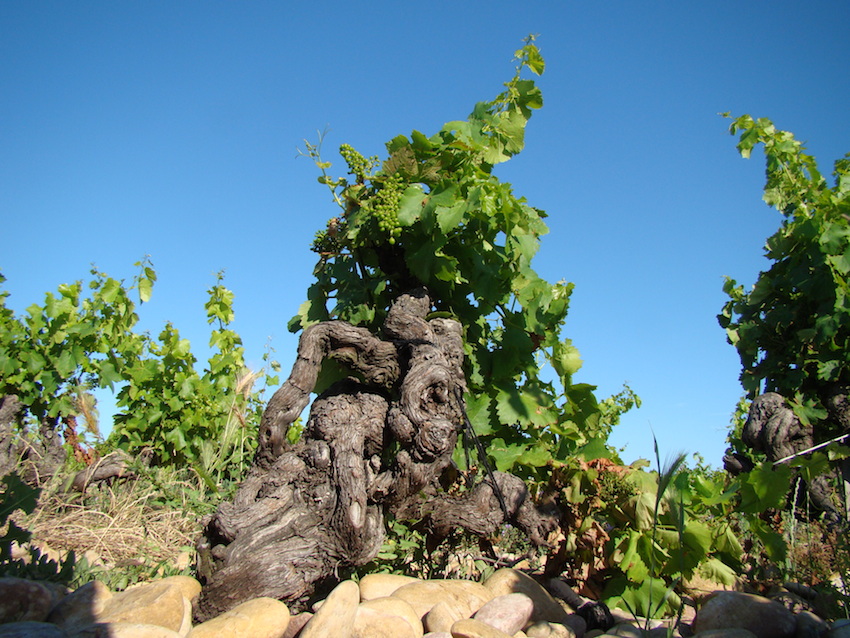
However, the age of a vine is a relative concept and like any human being, some will age faster than others… To complicate matters, this also depends on the grape variety and wine region.
Certain estates and appellations are well known form their old vines – and these can really be ‘old’ for a plant. Examples include Châteauneuf-du-Pape in France, Barossa Valley in Australia and some Rioja plots in Spain.
Where are the oldest vines in the world?
The Slovenian town of Maribor is home to a vine that has seen more than 450 years go by and this is considered the oldest vine in the world. Despite its age, it still produces grapes and is a symbol of the tow and the Slovenian Styria viticultural region.
The oldest vine in France can be found on the Sciences Po de Reims campus and is more than 300 years old. It has withstood many challenges and diseases to still be with us today.
How old is an ‘old vine’?
When a winemaker uses the term “old vines” on a label, it may simply mean that the wine is produced from the oldest vines (or not so young) on their property. New producers may believe that the first block that was planted 25 years ago, deserves to be recognised. But this will make the Châteauneuf-du-Pape producers laugh, with vines older than 60 or 80 years (some even over 100 years) commonly found in many parts of the area. Thus, Grenache often continues producing beautiful grapes even long after it should be enjoying retirement, while Gamay, on the hand, sees significantly fewer centenarians… It’s genetic, unfortunately, there’s nothing we can do about it.
The way in which we treat a vine also influences its longevity. A vineyard that is required to produce big yields every year will tire faster than one yielding a reasonable load. A vineyard harvested by machine (harshly shaken every year) also “wrinkles” faster than one harvested by hand.
When buying wine, do not hesitate to ask a winemaker the age of the vineyard when there is mention of “old vines” on the label. And remember, no matter the region, a vineyard under 25 years cannot reasonably be considered “old”. While the term may be used from 30 to 40 years, beyond 40 or 50 years a vineyard finally enters the world of real “old vines”, with the subsequent increase in quality.
Shop all wine currently on iDealwine
To read further on iDealwine Le Blog: