Syrah, the emblematic grape variety of the Rhône Valley, has been successfully exported to a number of French and international wine regions. Appreciated for its power and aromatic complexity, it produces rich, elegant wines. Discover Syrah’s origins, its distinctive characteristics and the terroirs on which the finest examples are produced.
Origins of Syrah
Syrah is thought to be derived from the Rhone variety Serine, which has nowadays virtually disappeared.
Several theories exist as to this legendary grape variety. Some say it originated from the Greek island of Syros, or that it was imposed by the tyrant Syracuse in Sicily. Others believe that it came from the Persian city of Shiraz (in present-day Iran), or that its origins are Syrian. There is also a theory that the variety was introduced to Hermitage by the famous Knight Gaspard de Stérimberg.
However, a DNA study carried out by INRA (the French national institute of agronomic research) in Montpellier, has shown that Syrah is the result of a cross between Mondeuse Blanche and Duerza, thus throwing out the myths and confirming its French origins. Mondeuse Blanche is a Savoyard grape variety that was also grown in the départements of Ain, Isère and Haute-Savoie, while Dureza is an Ardèche variety that, like Syrah, was once grown in Drôme and Isère. This study, based on genetic markers, also proved that Syrah has a sibling – Viognier, which is also the result of a cross between Mondeuse Blanc and Dureza.
The grape’s distinctive characteristics
Syrah thrives in Mediterranean climes, with hillsides that favour drainage and exposure to sunshine. It can grow on various soils, giving different characteristics to the wine. Syrah vines are vigorous, with a short ripening period, but they are also sensitive to chlorosis, drought and excess water, and are poorly adapted to soils with a high active lime content. They are also affected by wood rot known as “caries” as well as botrytis rot, particularly around harvest time. These factors make it an ideal grape variety for the northern Rhône Valley.
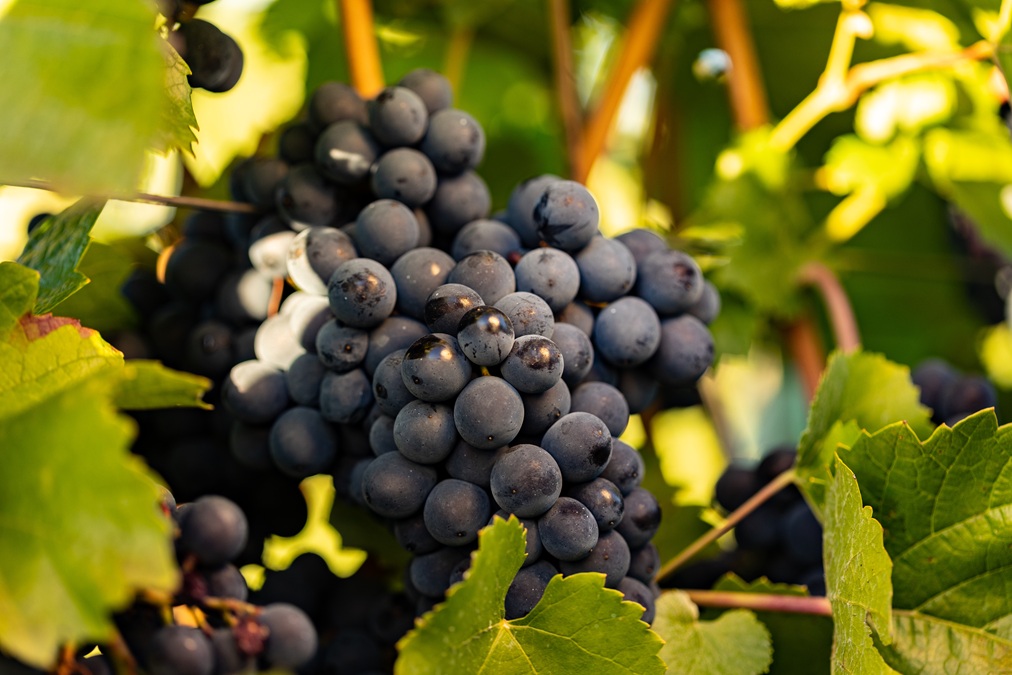
Upon tasting, Syrah wines are rich and generous, with a nose of red and black fruits (raspberry, redcurrant, blackberry), spices (pepper, liquorice, menthol), and flowers (peony, violet). On the palate, they show delicate and generally well-structured flavours with soft tannins. Hints of asphalt may appear when Syrah grapes are under-ripe, and if they are over-ripe, notes of dark chocolate and prunes can be present.
Syrah can be made as a single varietal wine or used as part of a blend, in which it brings tension and structure without overshadowing the other grape varieties.
Syrah across the French wine regions
With more than 70,000 hectares of vines in France, Syrah ranks as the third most-planted grape variety in the country (behind Merlot in first place, followed by Grenache). The French winegrowing region with the largest area planted with Syrah is Languedoc-Roussillon. However, the Rhône Valley, and more particularly the northern part, with its single-varietal Syrah wines and prestigious appellations, plays an instrumental role in this variety’s worldwide renown.
- In fact, the introduction of Syrah in Languedoc-Roussillon is fairly recent, but it has quickly become established thanks to its aromatic qualities. In this region, Syrah is most often used in blends, particularly with Grenache and Mourvèdre, bringing balance and complexity to the wines. Depending on the terroir and winemaking style, wines can range from supple, fruity styles that are accessible when young, to more concentrated, complex wines that are suitable for ageing.
- In the Rhône, Syrah is the second most widely planted grape variety, after Grenache, occupying around a third of the vineyard area. As the star grape variety of the northern Rhône, it is made here specifically as a single-varietal and produces magnificently concentrated, long-keeping red wines. Syrah wines vary considerably according to terroir, particularly those of Hermitage, Cornas, Saint-Joseph, Crozes-Hermitage and Côte-Rôtie.
Syrah also brings structure and longevity to blended wines such as Châteauneuf-du-Pape, Gigondas, Vacqueyras, Lirac, Rasteau and others in the southern Rhône. The blend is often made up of the three flagship grape varieties of the southern Rhône – Grenache (often the main variety), Syrah and Mourvèdre, shortened to “GSM” for those in the know.
The Rhône is fortunate to have a number of outstanding winemakers who bring out the best in its terroirs, such as the Reynaud family at Château Rayas and Domaine des Tours, Domaine Gerin and Guigal. - In Provence, the Syrah variety is also used to complement many blends, but it is rarely made as a single-varietal wine. It gives colour, flavour and structure to the famous rosés of Provence.
Syrah in Europe
The quality of Rhône wines has led Syrah to be exported beyond France’s borders. In Europe, Italy holds second place when it comes to Syrah vines, which have been planted in the country since 1899, especially in southern Tuscany and Sicily. Today, between 3,000 and 4,000 hectares of Syrah are grown in Italy, and the wines produced are sweeter and fuller-bodied than French Syrah.
Third place among the European winegrowing countries goes to Spain with around 3,000 hectares of Syrah planted in Catalonia, Castilla-La Mancha and Valencia. Here, this grape variety is often blended with Grenache to produce wines of powerful character.
Next comes Portugal with around 1,500 hectares planted, mostly in the regions of Alentejo and Douro.
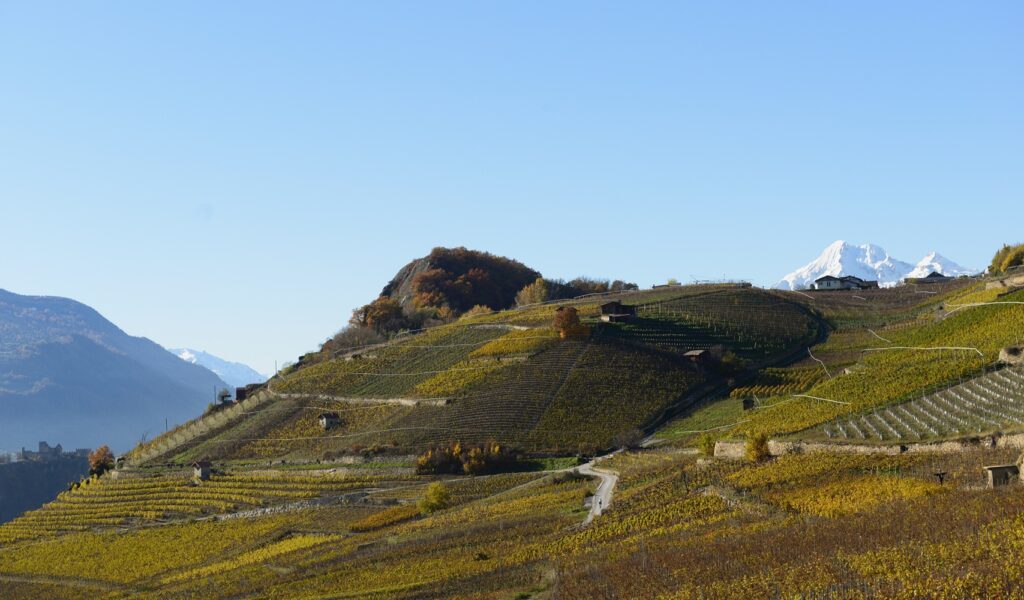
Other countries also produce Syrah in small quantities, resulting in some very interesting styles of wine that are coveted by connoisseurs. In Greece, Syrah develops a warm, spicy profile, while in Switzerland, it produces fresher, more elegant wines, marked by superb liveliness and fine aromas of black fruit and pepper.
Shiraz, or Syrah beyond Europe
- Until the end of the 20th century, Syrah was mainly grown in the Rhône Valley. Settlers brought some Rhodanian Syrah plants with them to Australia and the popularity of Rhône wines encouraged the expansion of the variety in the country. Today, Australia is the second largest producer of Syrah (known here as Shiraz), with around 40,000 hectares under cultivation (or 45% of the country’s red wines). Here, the wines are more opulent, with a generous, full body and a generally higher alcohol content than in France, due to the warmer climate. Some wines also display notes of vanilla, coconut or roasted coffee as a result of ageing in oak barrels. Discover Australian wines by tasting the iconic wines of the Penfolds estate, renowned for their power and remarkable concentration.
- Argentina, renowned for its famous Malbecs, has some 8,000 hectares of Syrah vines. Plantings have expanded in recent years and are concentrated in the Mendoza and San Juan regions, which offer ideal climate conditions for producing Syrah wines with a generous, ripe style.
- The United States have also followed this craze for this famous Rhône variety. Although California is already obsessed with Pinot Noir, particularly in the cooler areas, it produces expressive Syrah or Shiraz, marked by jammy black fruit, spices, leather and sometimes toasted notes from barrel ageing.
Meanwhile, Washington State has seen a spectacular increase in Syrah plantings. Thanks to a more continental climate and cool nights, the Syrah here develops a more balanced, livelier profile, with aromas of fresh black fruit, pepper, black olive and floral notes. Together, these two regions account for around 5,000 hectares of Syrah, or the majority of the US production.
Syrah from the United States for sale on iDealwine - In Chile, Syrah benefits from an oceanic influence and a variety of climates. It produces wines ranging from fresh, elegant styles to more mature, mineral and concentrated expressions. In South Africa, Syrah, often known as Shiraz here, produces wines with a strong character, combining notes of black fruit, deep spices, smoke and grilled meat. These two countries produce both blended and single-varietal wines, depending on the terroir.
Syrah has demonstrated its ability to adapt to terroirs far and wide, producing wines with diverse identities, known as Shiraz in some winegrowing regions.
Syrah or Shiraz?
Although France tops the list of Syrah producers and is considered to be the cradle of the variety, Australia has adopted it and given it an anglophone identity. The name “Shiraz” generally refers to “non-European” Syrah wines, characterised by a powerful style with heavy oak. Some producers around the world using list variety may also decide to use either Syrah or Shiraz on the label on their wine depending on whether it reflects more the French style of the Australian one.