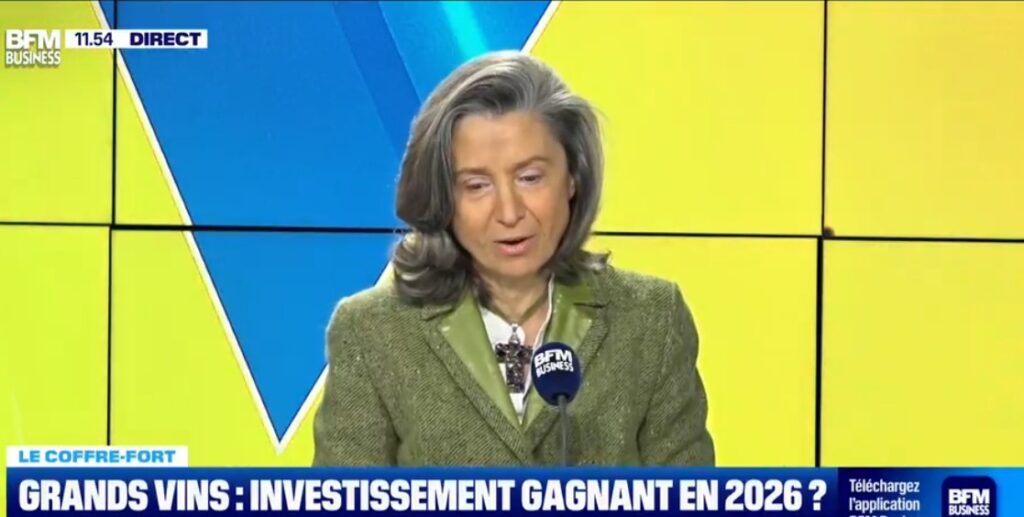
After Christmas, the beginning of the year is traditionally a quieter month in terms of wine consumption, but is it the same for wine purchases? Are the early-year auctions conducive to securing good deals? The journalist Antoine Larigaudrie asks Angélique de Lencquesaing the question to understand the latest market trends from an investment perspective. Buying well and stocking your cellar with bottles likely to appreciate in value is Angélique’s speciality. The co-founder of iDealwine publishes an annual Wine Auction Barometer that serves as a reference and analyses the trends.
Hello Angélique, could you first tell us how 2025 ended for auction markets?
The end of the year is traditionally a strong time for auctions, and 2025 continued this trend, which was still a surprise given the tests thrown at the market throughout the year (economic uncertainties, geopolitical situation). iDealwine recorded a historic record for auction sales in December, with €4.4M worth of wine going under the hammer. This also sets a record for the entire year; its auction sales amount to over €42M (fees included), up 9% compared to 2024. A strong upturn was observed in December, as Christmas and the end-of-year festivities remain a significant time for celebration, conducive to purchasing and consuming fine wine. iDealwine auctioned more than 300,000 bottles of grands crus last year.
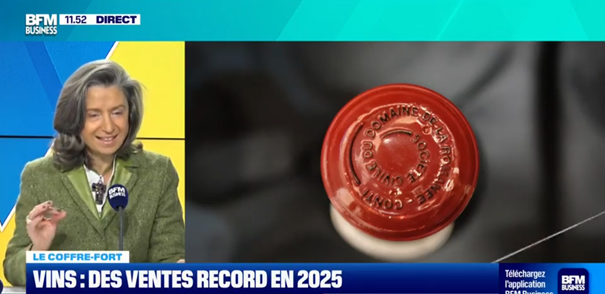
What were the wine regions preferred by enthusiasts?
Looking at the volumes sold in iDealwine auctions offers a snapshot of the distribution of bottles per region, which provides valuable insights for wine enthusiast looking to create a collection that aligns with market expectations.
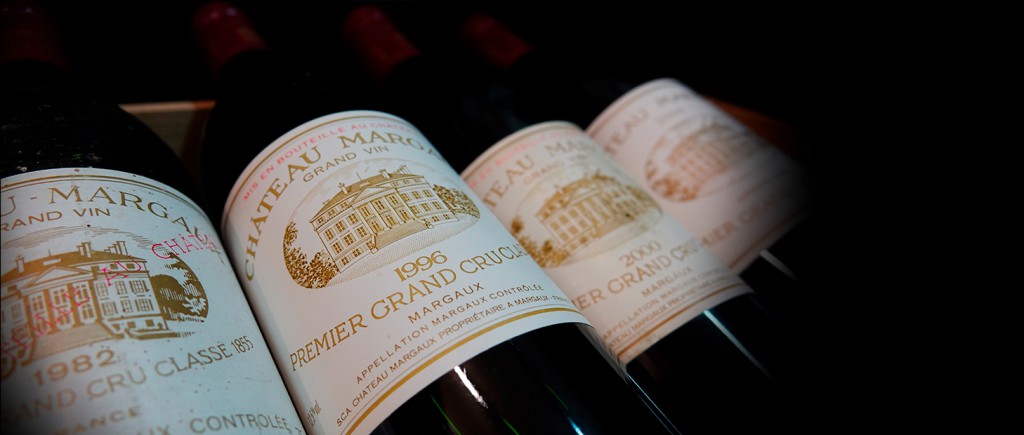
In 2025, Bordeaux remained the leading wine region represented in our auctions. A one in three bottles auctioned on iDealwine is a Bordeaux grand cru (34%, or more than 105,000 bottles when scaled to 750ml.)
Burgundy is in second place, with an impressive volume of 82,000 bottles sold at auction in 2025, representing 27% of the total. The Rhône Valley brings up the rear of this classic trio with 11% of the volume auctioned. It total, these three regions represent 72% of all sales.
So the classic trio is still popular in the enthusiasts’ collections. Which other regions stand out?
With the volume sold at auction rising significantly (up 19% which is the equivalent to 309k more bottles sold), some regions are progressing faster than the average. This is the case for Loire’s vineyards, in the broad sense, including the wines of Auvergne, which are up by 20% (18,000 bottles), Beaujolais (+48%, 4,500 bottles), or even Corsica (with 1,350 bottles sold). These changes, which affect regions with low sales volumes, indicate a trend, giving enthusiasts a direction to go in, and it is this trend that deserves to be followed.
What about non-French wines? Are they an investment option to consider?
French wines continue to attract enthusiasts from across the globe. In fact, non-French wines accounted for 6.5% of the volume auctioned last year. These wines should not be overlooked from an investment perspective, as there are quality wines from all the world’s winemaking regions and wine enthusiasts are located all over the world – iDealwine has buyers in more than 60 countries. Italian wines hold a special place in auctions, making up 50% of the bottles sold at auction produced outside of France, but Spain, the USA, Germany… are also exciting choices for enthusiasts that we will explore further in our Auction Barometer.
In January, after the euphoria of the end-of-year celebrations, does the auction market have a quite phase?
Not exactly, no, because wine enthusiasts around the world have different festive moments throughout the year. Lunar New Year calls for fine wine which means that Asian enthusiasts are eager to open grand bottles for the occasion. The Year of the Fire Horse starts on 17 February, giving bidders a few more weeks to acquire coveted bottles. Their quest is directed towards rare wines, starting with those from Burgundy, and, more generally, they opt for iconic vintages and wines that are hard to find which will enrich their collection … and impress their loved ones.
On iDealwine, the year is starting positively, as the average prices experienced a lull in 2025 (€137 instead of €149 in 2024, a 9% drop), and this return to attractive levels be music to the ears of wine enthusiasts.
The question that comes around every January… do you sell non-alcoholic wines for those taking part in Dry January?
No, we do not. We understand that some may want to take on the challenge of Dry January, but we advocate an attitude of moderation, to be observed throughout the year to maintain our ability to fully appreciate the quality of a wine.
Our approach is to showcase and advocate the extraordinary work carried out by talented winemakers across the world. To be appreciated fully, their wine should be consumed in moderation. In this regard, the consumption of wine per capita over the age of 15 in France has practically halved in thirty years, decreasing from 78L to 40.5L between 1995 and 2024. That is six glasses of wine per week, a volume much lower than the French health recommendations (which are, for reference, set at 10 glasses of wine per week).
One last thing, given recent events in France, are snow and cold weather dangerous for the vine?
The well-defined seasons are not a problem for vine development, quite the opposite actually. Cold is conducive to the cleansing of nature; but really low temperatures can pose a problem for vines and weaken young plants in particular.
Cold weather – snow, frost, unusually low temperatures – are more dangerous if they occur later in winter and after a spell of warmer weather which can awaken the vine from it hibernation. Cold weather can be catastrophic if the first buds, known as budburst, have already appeared as these can be destroyed, meaning that yields can be reduced. But its still far too early for budburst! Only the future knows what the 2026 vintage will be like.
Find out more about selling your wines on iDealwine
Request an estimate of your bottles – and it’s free!