The auctions in May highlighted regions such as the Loire Valley, Jura and Champagne, and saw resound success for German wines. Let’s see how this played out.
La Coulée de Serrant: a celebrated sole-ownership vineyard since Louis XI
Owned by the Joly family, Domaine de la Coulée de Serrant acts as the sole actor of the 7-hectare appellation, composed of vines aged 35 to 80 years. Considered the best white wine by Louis XI and Louis XIV, the continued attractiveness of this wine from the Loire Valley was notably confirmed through recent auction sales. The 2010 vintage went under the hammer for €151, 30% above its price estimate. Bottles from 2017, 1994, 1990, 1989 and 1988 sold for between €88 and €308, with lots going for 6% to +33% above their price estimates.
Louis Roederer: an unwavering appeal
While the house is now run by Frédéric Rouzaud, it still embodies the innovation and visionary spirit of Camille Olry-Roederer. An iconic figure of Champagne, the house remains one of the most highly sought after, especially when mature vintages can be found at auction. For example, a 1964 Cristal went under the hammer for €503 with a starting price of €315, and a 1990 Cristal was sold for €579 (+21%).
Domaine des Miroirs: a Japanese love affair with Jura
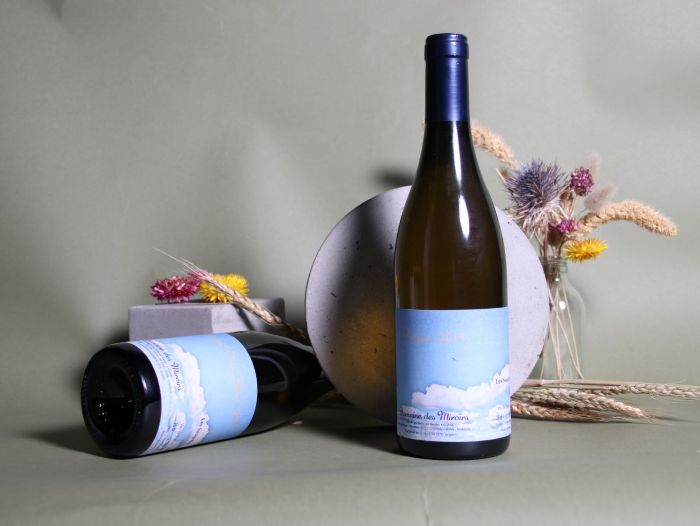
Since 2011, a Japanese couple who need no introduction has risen to the ranks as one of the greatest wines of Jura. Their natural wines are renowned for their purity and authenticity, produced on small plots, barely four hectares in total. This sensitivity to the terroir coupled with low yields makes Domaine des Miroirs’s wines desirable worldwide.
Whether buyers come from the United States, Spain, France, or Hong Kong, its bottles sell at premium prices. 2018 I need the Sun (starting at €541) went under the hammer for €830, two bottles of 2012 Entre Deux Bleus Les Saugettes were auctioned for €1,208 (+11.6%), and a 2019 Mizuiro Les Saugettes sold for €629 (+5%).
German wines: a trend to watch closely
During recent auctions, it was impossible not to notice the rapid rise of certain German wines. Many wines saw their hammer prices far surpass their price estimates. For example, Brut Nature Johannes Aufricht went for 140% above its estimate (€302), 2020 Riesling Trocken GG Westhofen Kirchspiel Keller for +61% (€264) and 2017 Spatburgunder Trocken GG Dalsheim Burgel Keller for +58% (€239).
German semi-sweet and sweet wines constitute a good part of the volumes traded, but the current trend leans more towards dry styles, well illustrated by the sales of wines labelled as Trocken in particular.