Every bottle crafted by Krug embodies a singular harmony and is a testament to decades of patience, exacting expertise, and jeweller-like attention to detail. Find out about the legacy of Maison Krug, shaped by a steadfast commitment to perfection and an unrelenting pursuit of excellence.
“Never compromise.” It was with this simple guiding principle in mind that Johann-Joseph Krug founded his eponymous Champagne house in 1843. Before establishing his own venture, he trained with what is now the esteemed Maison Jacquesson. Johann-Joseph Krug was often seen with a notebook in hand, recording every observation and reflection. He wrote everything down, preserved everything, and catalogued everything. This dedication to documenting every detail is reflected in the remarkable archive he assembled, a vast library of samples from each parcel that became an extraordinary reserve wine bank. Year after year, his sole ambition remained the same: to craft the finest Champagne possible, whatever the weather challenges. His vision became reality soon with the creation of Cuvée No. 1, known today as Grande Cuvée.
As generations succeeded one another, new Champagnes emerged including Krug Vintage, produced only when the year is deemed truly exceptional, and Krug Rosé, first introduced in 1983. Over the years, the Champagne house has consistently drawn on its exceptional parcels to create its rarest wines, most notably the prestigious Clos du Mesnil and Clos d’Ambonnay.
Today, the sixth generation leads the estate, unwavering in its commitment to the traditional methods on which Krug was built. The library of reserve wines has continued to grow and now contains 150 wines from around ten different vintages, some as old as fifteen years. This exceptional collection safeguards the unique expression of each individual parcel. As a result, whatever the conditions of the vintage, Krug Champagnes maintain the same level of excellence since the terroir alone reveals the singular character of each parcel.
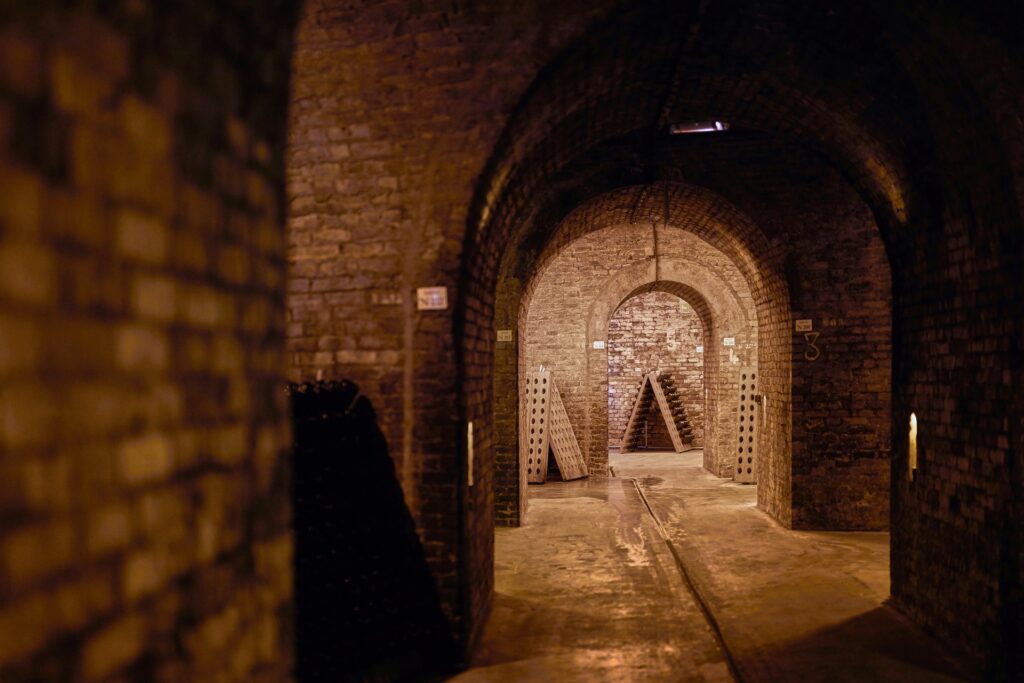
This exacting philosophy also extends to the winery, where cellar master Julie Cavil, former oenologist under Eric Lebel, has upheld the precision and practices that define Krug since 2020. Following the harvest, the grapes undergo parcel-by-parcel fermentation in small oak casks during several weeks, a method that remains almost unique in the region to this day. This approach allows each base wine to develop its distinctive character and freshness, facilitating the blending process and enhancing ageing potential. Before assembling the final blend, the cellar master and her team taste and evaluate the wines from each parcel, along with all 150 reserve wines. After tasting nearly 400 wines, Julie Cavil begins the blending process and submits three potential iterations of Krug Grande Cuvée to a tasting committee, which will select only one. This same committee also evaluates the wines of the year to determine whether a Krug Vintage cuvée can also be produced.
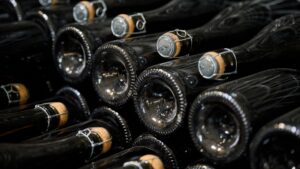
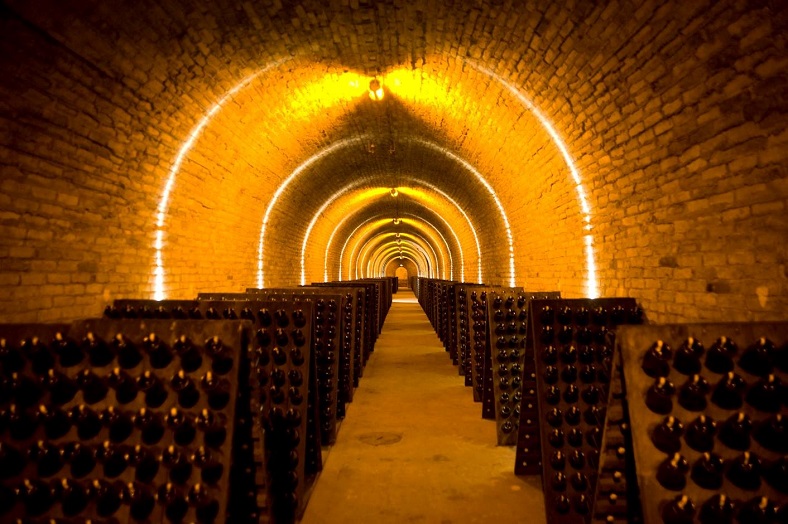
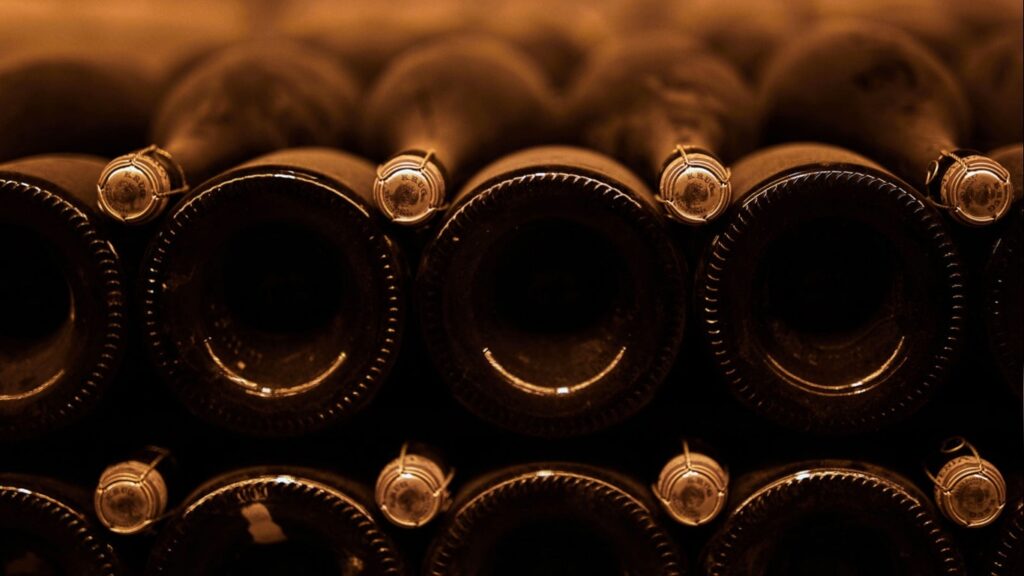
With the blend chosen, arguably the most defining phase – and the cornerstone of Krug’s philosophy and patience – the next step is prolonged ageing. The strength of the house lies in its ability to mature its Champagnes for far longer than legally required. For instance, the Grande Cuvée spends at least seven years in the cellar, while the rosé stays there for five. As for the most prestigious Champagnes – Krug Vintage, Clos du Mesnil and Clos d’Ambonnay – they remain in the cellars for at least a decade. This long ageing allows the wines to develop their full aromatic spectrum and reach the level of excellence for which Krug is renowned.
The house combines perfectionism and patience to craft Champagnes celebrated worldwide for their finesse, uniqueness and ageing potential. A Champagne house we are proud to count among our partner wineries here at iDealwine, offering some of its finest expressions such as Clos du Mesnil and the Krug Vintage.
Krug Champagnes available on iDealwine
Krug Grande Cuvée
The house’s iconic “multi-vintage” Champagne accounts for nearly 80% of its production. It is a remarkable blend of dozens – sometimes more than a hundred – reserve wines drawn from all three major Champagne grape varieties. The nose is rich and expressive, offering layers of candied fruit, citrus fruit, toasted hazelnut, brioche, buttered pastry and hints of mocha. On the palate, the wine is supple, ample, powerful yet finely textured, delivering a refined vinosity.
Krug Rosé Brut
Krug Rosé, created in 1983, is one of the house’s most recent creations. As with all Krug Champagnes, the wine is crafted from a meticulous selection of individual parcels, each vinified separately in small oak casks to build texture and complexity. The wine opens with delicate yet indulgent red fruit aromatics, both on the nose and the palate, sure to delight rosé Champagne enthusiasts.
Krug Vintage
Krug Vintage is the house’s vintage Champagne. Like Grande Cuvée, it is crafted from the three noble Champagne grape varieties and a selection of reserve wines. The defining difference lies in it being created exclusively in exceptional years, followed by around a decade of ageing. The wine typically opens with a vibrant, citrus-tinged nose layered with notes of orange zest, liquorice, cocoa and biscuit. The palate is driven by remarkable structure and depth, culminating in an extraordinarily long finish.
Collection Krug
Krug Collection brings together a selection of Krug Vintage bottlings from some of the finest years. Presented in an exceptionally rare case – sold by iDealwine whenever available, though in extremely limited quantities – these bottles offer a unique opportunity to experience the finest expressions from one of Champagne’s most iconic houses.
Krug Clos du Mesnil
Walled vineyards, or clos, are exceedingly rare in Champagne. They are considered legendary since they harbour the very finest parcels, enclosed in walls. Clos du Mesnil ranks among the most iconic of these exceptional treasures. Entirely planted with Chardonnay, it covers just 1.84 hectares within the village of Mesnil-sur-Oger. Acquired by Krug in 1971, it yields one of the Champagne region’s most singular wines: a single-vineyard, single-varietal, single-vintage Blanc de Blancs noted for its purity, richness, and complexity, and extraordinary ageing potential.
All Champagnes currently for sale on iDealwine
Read also:
Heidsieck, Krug, Bollinger: How Germany shaped Champagne