How long can Champagne be kept for? Does it have an expiry date? Can you drink a 20-year-old Champagne? How about after 30 or even 40 years? Is it risky to drink particularly old Champagne?
Whilst its bubbles add something special, don’t forget that Champagne is still a wine at its core, and this means it can age. And being a wine, as we see for ourselves and so many other things, some age better, and for longer, than others. The finest Champagne houses are known to organise tastings of cuvées bottled over a hundred years ago, an experience we hear is exceptional…So how do you know which Champagnes are likely to age well?
Before we get into the details, it’s worth noting that this classic fizz tends to have an ageing capacity similar to that of a Burgundy Chardonnay or a Loire white, for example. Bubbles don’t alter its cellaring potential. Whilst much depends on the specific Champagne, there are certain criteria that can give you an idea.
Vintage Champagnes in particular (as opposed to non-vintage cuvées, which are known more for their youthful character) are to be kept in mind. The format (a magnum, even a Jeroboam), the character of the Champagne (its balance, its acidity), and its cellaring conditions (humidity, coolness) all have a role to play in the ageing potential of your favourite fizz.
The criteria to consider
To give you more of an overview, characteristics that all have an impact on any wine’s ageing potential include the grape varieties used, the terroir, the age of the vines, the vintage, vinification techniques, and its overall balance.
Acidity
The balance of a wine’s profile is central to its potential for ageing well, especially in terms of its acidity levels: since there are no tannins in Champagne, acidity acts as the wine’s backbone and will protect its structure and aromatic palette over time. A low pH level (ie. higher acidity) at harvest therefore allows Champagne (as with white wine in general) to age well. The vintage’s style (cool/warm) thus plays a key role, as do other factors that can influence acidity: grape variety, terroir, winemaking (particularly malolactic fermentation), and harvest date.
As with other white wines, malolactic fermentation also impacts Champagne’s ageing potential by rounding it out and reducing its acidity, thus decreasing its ability to age gracefully. As a reminder, malolactic fermentation is the second fermentation following alcoholic fermentation, which transforms the malic acid in the juice into lactic acid – less harsh and less acidic – through the action of bacteria. This process may not occur at all (either because it is intentionally halted or because it did not start on its own), or it may occur partially or fully, resulting in a different level of acidity each time.
Dosage
In the specific case of Champagne, it’s not just acidity that helps it age: dosage also plays a significant role, since sugar acts as a preservative and thus allows Champagne to last longer. That said, don’t panic if you’re a fan of non-dosage Champagnes – this is not a complete deal-breaker for Champagne ageing.
The role of the type of Champagne (Blanc de Blancs, Blanc de Noirs, rosé, etc.) in its ageing potential
While no official study has been carried out to compare the ageing potential of Blanc de Blancs and Blanc de Noirs cuvée, we can posit that Blanc de Blancs made from Chardonnay – which is less round and fresher – will possess a balance that makes them slightly more suited to ageing. However, there are numerous examples of exceptional blended Champagnes and even Blanc de Noirs capable of spending decades in the cellar.
Similarly, rosé Champagnes are generally made to be enjoyed within two years, to best appreciate their fresh red fruit aromas, but here, too, there are some exceptions to the rule.
Material quality
Finally, as is always the case with wine, the quality of the cork also plays a role in the wine’s ageing potential – nothing new here, but certainly worth remembering.
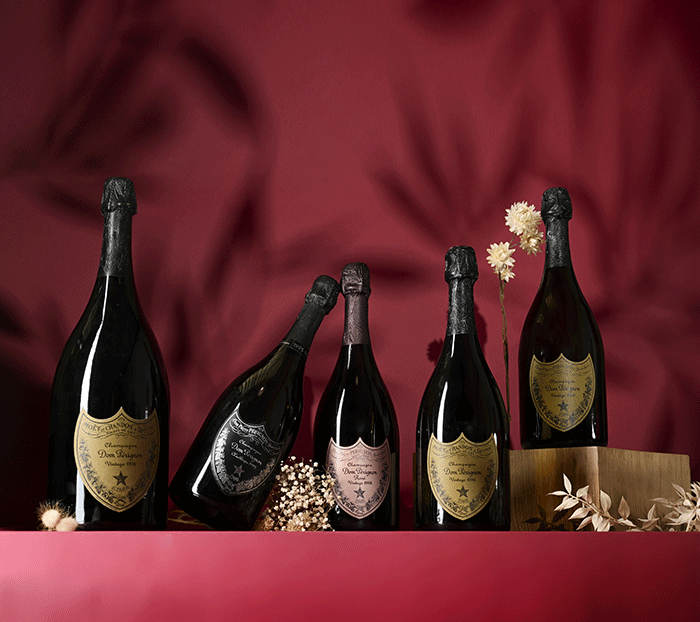
Do vintage Champagnes age better than non-vintage ones?
There’s no hard-and-fast rule here: this is generally the case, but you shouldn’t dismiss non-vintage Champagnes as potential cellar dwellers. Vintage Champagnes are made from the harvest of a single year and are usually produced only during great vintages; this is therefore, in principle, a guarantee of decent ageing potential. Generally, vintage wines released onto the market after three, five, or even ten years in the cellar are ready to drink. But keeping them longer is by no means off the table and can, on the contrary, transform them into something even more special.
A quick reminder about Champagne production: right from the start, the process of making Champagne is a long one. It has to age on lees for at least fifteen months before being released for sale, a period that typically extends to thirty-six months at most of the finest Maisons. For vintage Champagnes, the ageing period is even longer: five to six years, if not more. Once released, these wines are perfectly ready to drink; however, for those with a good cellar, letting them age another five or ten years allows them to deepen the nuances of their profile.
Champagne has a unique feature, though, another factor that plays a significant role in the wine’s age: the disgorgement date. This date indicates when the sediment of dead yeast is removed from the bottle (usually by freezing the neck, where the sediment accumulates) and replaced with a dosage liqueur (a mixture of reserve wine and cane sugar – unless it is a non-dosage Champagne, in which case there will be no cane sugar). The more recent the disgorgement date, the more “youthful” the Champagne will appear in terms of its aromas and freshness. Late disgorgement is generally carried out on vintage Champagnes, but not exclusively.
How do you age Champagne properly?
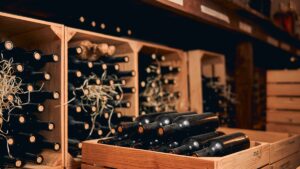
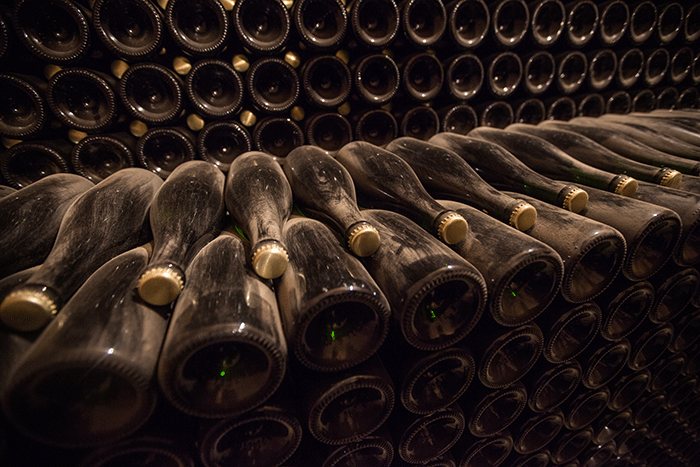
As with all wines, Champagne must be aged under very specific conditions in terms of temperature, humidity, and darkness – in short, a good wine cellar; and, as with all wines, the bottles must be stored on their sides so that the cork remains submerged.
How does Champagne age? What does aged Champagne taste like?
As it ages, Champagne evolves; its aromas become more complex and intense but also shift in character: notes of forest floor, truffle, and toasted bread replace the initial, fresher, floral, and fruity varietal aromas. Chardonnay, in particular, can develop aromas of beeswax and honeyed notes as it ages.
This is an important factor to consider, as not everyone enjoys this style of wine, and you might be surprised by the flavour direction an older Champagne takes. In any case, ageing brings a more mature, more vinous character, even to Chardonnay-based wines. And as for the all-important bubbles? Well, some Champagne can stay fizzy for a long time, even after 50 years.
Food and wine pairings: what to serve with an aged Champagne?
When it comes to pairings, these “mature” Champagnes transition seamlessly from aperitif to dinner, complementing dishes such as creamy, sweetbreads, or veal tenderloin, for example. They also pair well with foie gras (one to bear in mind for the festive period). As for cheeses, try a 24-month-aged Comté, a well-aged Chaource, or a Valençay – in any case, cheeses with character, and not too acidic.
Good to know
For those restrained enough to save their opened bottle of Champagne for the next day, you’ll need to create a vacuum seal and store the bottle in the refrigerator. Although it is best to enjoy it fairly quickly afterwards, as the bubbles are known to fizzle out…