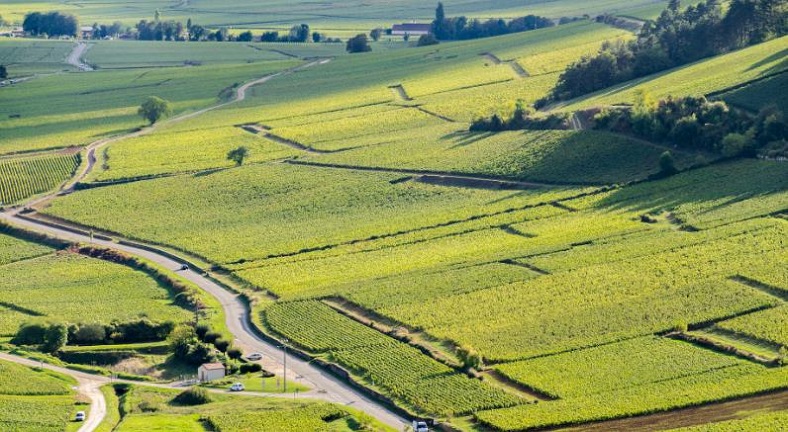
Explore the Côte de Beaune and the Côte de Nuits with us and learn the secrets of your favourite Burgundian climats and terroirs. From their history, geography and geology to wine service tips and tasting notes, you’ll learn everything there is to know!
Corton-Charlemagne: Le Charlemagne and En-Charlemagne
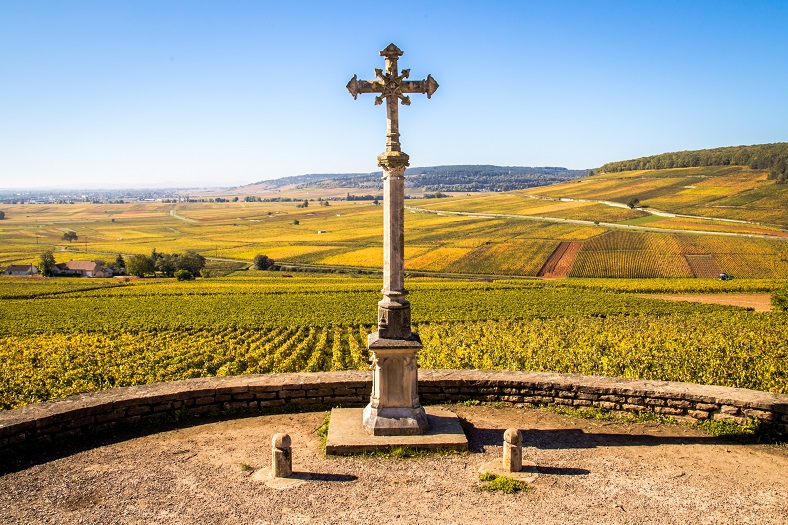
Let’s take a tour of Corton hill to delve into the complexities of Charlemagne, an iconic white wine-growing area on the hill. Covering nearly 71 hectares, the Corton-Charlemagne appellation spans the three villages or communes of Ladoix-Serrigny, Aloxe-Corton and Pernand-Vergelesses. However, the so-called “En-Charlemagne” plot lies exclusively in Pernand-Vergelesses, accounting for nearly 17 hectares of vines. As for the vineyard plot known as “Le Charlemagne”, it covers more than 16 hectares in the commune of Aloxe-Corton. Wines made from both the Le Charlemagne and the En-Charlemagne vineyards are entitled to the Corton-Charlemagne and Charlemagne AOC designations.
According to history, Charlemagne donated a large tract of land to the canons of the Collegiate Church of Saint Andoche, in Saulieu, in 775. The vineyard is thus thought to have been named after the emperor. Over time, the vineyard has certainly expanded, but the name has remained the same.
The Corton-Charlemagne AOC is quite unique in Burgundy, as it allows for the cultivation of several grape varieties that are blended with Chardonnay. It is not uncommon to find various types of Pinot (Noir, Beurrot, and Blanc) as well as Aligoté, which was widely grown here in the 19th and early 20th centuries. The En Charlemagne plot enjoys a west-facing aspect, offering afternoon sunshine and later ripening, while Le Charlemagne is south-facing, resulting in wines with a generally more spiced character.
Both these terroirs produce wines that are deep, vibrant and quite vinous, but always driven by incredibly elegant minerality. In short, they offer some very fine white Burgundy wines that are still affordable.
➡️ Shop Corton-Charlemagne for sale on iDealwine
Gevrey-Chambertin Premier Cru Clos Saint Jacques
Let’s move on now to Gevrey-Chambertin and to perhaps one of this commune’s most famous winegrowing areas – the Côte Saint-Jacques – and, more specifically, to the Clos Saint Jacques plot. In Gevrey-Chambertin, you’ll find no Chardonnay at all, only Pinot Noir. Often a wine made for laying down, Gevrey-Chambertin has acquired a reputation as a firm and concentrated Pinot with a serious, animal nose. The Pinot grown on the 6.7 hectares that make up the Clos Saint Jacques is at the top of its class. Surrounded by a wall, with the Cazetiers premier cru plot on one side and the Lavaux-Saint-Jacques and Estournelles Saint-Jacques premier crus on the other, Clos-Saint-Jacques has acquired a reputation over the centuries for extremely natural wines.
The vineyard owes its name to a statue of St. James (known as Saint Jacques in French) found on the site. It is thought to date back to 1528. Writings found in the Château de Gevrey reveal that one of the properties owned by the Abbey of Cluny was surrounded by walls. Might this be the Clos Saint Jacques, whose walls have survived? In the early 20th century, the Comte de Moucheron who owned Clos Saint Jacques – at that time a “monopole” – declined grand cru status for the vineyard not seeing any benefit in this “republican system”. Nowadays divided between five owners, Clos Saint Jacques produces a superb Gevrey on stony, marl-limestone soil with an east-facing aspect. Displaying a rich bouquet, it is a serious wine, often ideal for laying down. The slope ensures freshness even in hot years and gives the wine superb minerality. It is fair to say it is one of the finest premier crus in the whole of the Côte de Nuits.
➡️ Shop Gevrey-Chambertin Clos Saint-Jacques for sale on iDealwine
Nuits-Saint-Georges Les Saint-Georges
We bring you now to Nuits-Saint-Georges, the winegrowing cradle of the Côte de Nuits, to which it gave its name. Renowned for its long-ageing red wines and for its trading power, the town of Nuits-Saint-Georges reigned over the Côte de Nuits just as Beaune reigned over the Côte de Beaune. Famed for spirited wines that age tremendously, although sometimes hard-edged, the Nuits vineyards produce excellent wines in large quantities. Here we shall explore one of them: Les Saint-Georges, classified as a premier cru, but whose history deserves a closer look.
Covering 7.5 hectares on the southern edge of the town of Nuits, where it marks the boundary with the village of Prémaux-Prissey and the premier cru vineyard Les Didiers, the Saint-Georges plot is said to have been the first plot of vines planted on the entire Côte de Nuits in the year 1000. It is thought to have been entrusted to the brotherhood of Saint Georges, the patron saint of the Nuits vineyards, after which the plot was named. Although long considered to be one of the best plots in the Nuiton region, Saint-Georges was never awarded the precious grand cru label in the classifications of the 1930s. Henri Gouges, who owned a large part of this land and was also one of the legislators behind the creation of the AOCs, did not want to be both judge and jury. As a result, the vineyard retained its premier cru status — perhaps justifiably so when compared to the grand crus of Nuits, which are often known for their superior finesse. Nevertheless, the Saint-Georges terroir produces wines with outstanding ageing potential and, once the tannins have mellowed, they are some of most spectacular wines in Burgundy. Its natural powerfulness stems from a fairly heavy clay soil, with some outcropping pebbles, lending this exceptional Burgundian premier cru a serious character, strength, and ageing potential. It’s a premier cru definitely worth cellaring for special occasions.
➡️ Shop Nuits-Saint-Georges wines on sale on iDealwine
Beaune Premier Cru Les Grèves
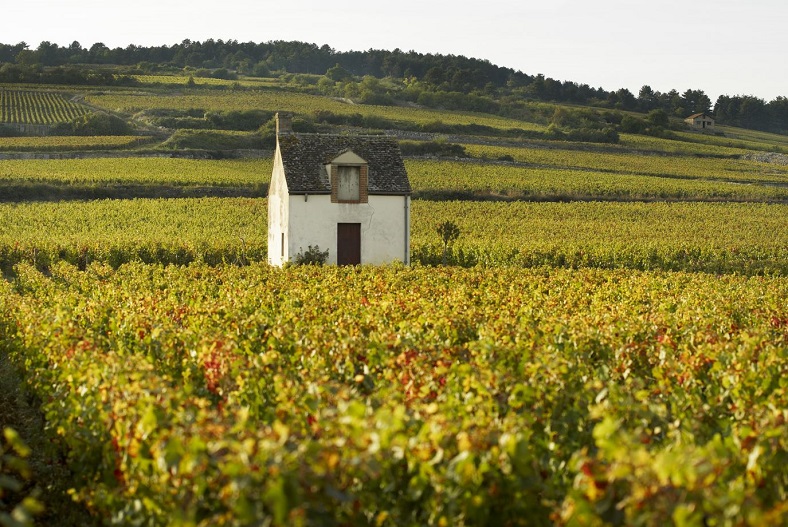
Next, we find ourselves in Beaune, the main town of the Côte de Beaune. As the spearhead of Burgundy winegrowing, the town is home to many négociants or wine merchants. However, despite the fame of its name, Beaune’s vineyards have remained in the shadows.
Les Grèves, a terroir of rare quality in the Côte de Beaune, produces one of the finest red wines of this entire area. Covering more than 31 hectares just outside the town, Les Grèves richly deserves its premier cru status – and perhaps even more. The lower part of the vineyard produces expressive wines, marked by a soil of red clay. The middle part produces silky wines. Facing due east, this plot covered with small stones is home to the best-known wine of the whole of Beaune, Les Grèves Vignes de l’Enfant Jésus, a luxuriously aged wine with a fleshy palate. The upper part of the Grèves vineyard mainly produces white wines that are quite full-bodied, taut, fresh and slightly lemony. In Old French, the word grèves could refer to an area of fine, even sandy, gravel and is thought to derive from the Latin grava. Generally speaking, in the Burgundy region, grèves refers to rocky or uncultivated land suitable for growing vines. Here, the vines produce the very best that the appellation has to offer – a truly great and still little-known red wine. Take heed!
➡️ Find Beaune Premier Cru Les Grèves on sale on iDealwine
Vosne-Romanée Premier Cru Les Gaudichots
Let us take you now to the prestigious Vosne-Romanée vineyards, to a plot close to the awe-inspiring grand crus, whose destiny could have been quite different. The terroir of Les Gaudichots has had an eventful history, after narrowly missing out on being ennobled as a grand cru.
During the 19th century, some of its land was incorporated into the neighbouring grand cru plots La Tâche and La Grande Rue. More than 4.62 hectares are entitled to use either the name La Tâche or that of Les Gaudichots, while 0.23 hectares of La Grande Rue have the double appellation Les Gaudichots or La Grande Rue. Today, just 0.79 hectares, mostly owned by Domaine Forey, have the right to use only the name Les Gaudichots. Split up into three plots next to La Tâche and La Grande Rue, Les Gaudichots is perhaps the best-placed premier cru on the winegrowing scene. However, although close to all these grand crus, this remaining part lacks the latters’ extraordinary constitution and charm. The name Les Gaudichots is said to come from the Burgundian dialect, where Gode means “stupid”, “simple” or “thick”. Perhaps a former owner of this plot was not as genius as his land… So, although part of Les Gaudichots became La Tâche – thus quadrupling the original surface area of what is now one of the best-known terroirs or climats in Burgundy – this premier cru is still a great pleasure to drink.
➡️ Shop Vosne-Romanée wines on sale on iDealwine
Chambolle-Musigny Premier Cru Les Amoureuses
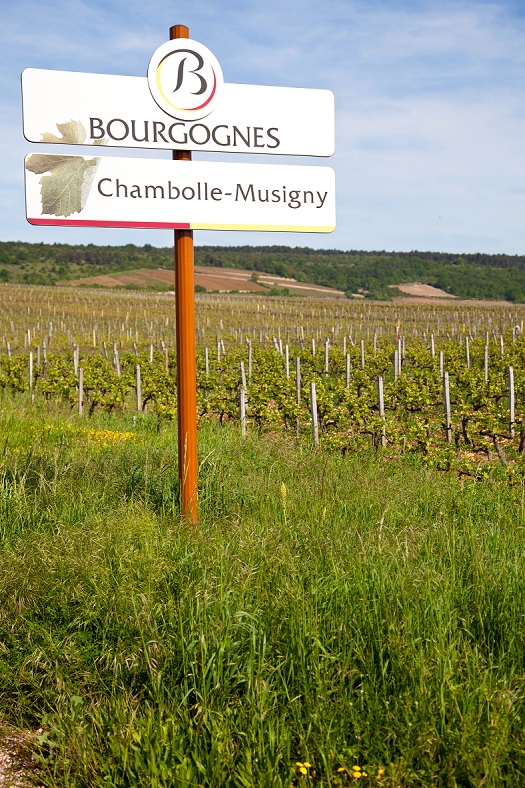
Next we come to a village with a name as charming as its wines, Chambolle-Musigny, a tiny winegrowing village that has resisted urbanisation and is entirely dedicated to the cultivation of vines. The Chambolle vineyard is home to two of the finest grand crus, Musigny and Bonnes-Mares, but you’ll also find a premier cru that has built a reputation as one of Burgundy’s finest, the enigmatically named “Les Amoureuses”.
Situated below the Musigny plots, this terroir covering 5.4 hectares is undoubtedly the best representative of the appellation’s typicity, astounding with its superlative finesse, floral aromatics and expression of spices. On the palate, its length, carried by a mineral finish and an impeccably silky mouthfeel, put it largely on a par with the grand crus.
The origin of its name is unknown. Perhaps it comes from the Burgundian dialect, which describes a soil as “amoureuse” (in love) when it sticks to your feet. This is particularly true of this shallow, sticky clay terroir, lying on a compact limestone slab. Or could it come from the superb view that this plot offers of the Vougeot vineyards below? At a time when winegrowing was predominantly male, such evocative names weren’t rare – the Pucelles plot (the maidens) in Puligny-Montrachet springs to mind. “Les Amoureuses” might then have been meant to highlight the charming, even “feminine” character of this wine, as attractive as a lover.
One thing is certain – its extremely charming, floral aromas and touch of richness on the palate, will, we are sure, convince you of its grand cru-level potential.
➡️ Shop Chambolle-Musigny Premier Cru Les Amoureuses on sale on iDealwine
Meursault Premier Cru Perrières
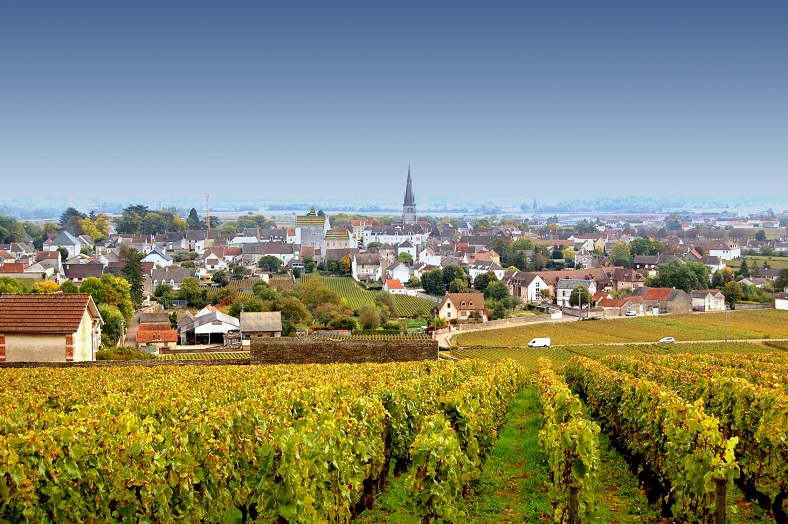
Now let’s discover the Meursault appellation and one of its 19 premier crus, Perrières. The Meusault appellation, created in 1937, covers 385 hectares and produces almost exclusively white wine, with only around 20 hectares devoted to red. It produces one of the world’s most famous white wines, recognisable by its aromas of almond and toasted hazelnut, its buttery, mineral notes and its powerful, rich, smooth palate.
The Perrières climat or terroir encompasses the vineyard plots of Aux Perrières and Les Perrières-Dessus and part of Les Perrières-Dessous. These were limestone quarries, which are still visible today although partly filled in. In fact, the name Perrières comes from the Old French petrarium, meaning “stone quarry”. The Perrières terroir covers a total of just over 13 hectares and lies to the very south of the Meursault appellation, with Les Perrières-Dessous marking the border with the Puligny-Montrachet appellation. It is one of the most famous and highly reputed terroirs of the Meusault appellation. “These are wines of perfect clarity, finesse and exquisite fragrance, which will easily keep for thirty or forty years. After true Montrachet, I know of a no more exquisite white wine”, wrote Dr. Lavalle in his History and Statistics of the Great Wines of the Côte-d’Or (1855).
➡️ Find Meursault Perrières on sale on iDealwine
Marsannay Les Longeroies
Here, we present the Marsannay appellation and one of its finest terroirs or climats – Les Longeroies.
As the northern gateway to one of the world’s most prestigious wine regions, the Côte d’Or, the Marsannay appellation lies at the top of the Côte de Nuits, an area renowned for its red wines. Marsannay, though, produces both Chardonnay for white Marsannay and Pinot Noir for the red and rosé wines of the AOC (representing 43 plots and 22 plots respectively).
Right now, Marsannay is a storehouse for estates and vintages offering excellent value for money, and a number of key figures such as Sylvain Pataille and Bruno Clair are gradually emerging, taking the appellation to new heights. It won’t therefore be long before the appellation has its first premier cru. Intense discussion is underway at the highest levels to fill this void.
Now, let’s talk about the wines. Marsannay is a great introduction to Burgundy’s savoir-faire. The reds are lively on the palate, with firm tannins that will soften over time. As for Marsannay rose, it is reputed for its redcurrant and white fruit notes, its dense fleshiness and its ability to pair with hearty dishes. Finally, the whites are popular for their fullness, their nice creamy texture and, above all, their excellent ageing potential.
Les Longeroies is one of the many Marsannay terroirs that leaves no connoisseur indifferent. The area enjoys ideal exposure to the east and south-west and the soil is rich in limestone, stone, marl and clay. In fact, there is much speculation as to whether it will be made a premier cru.
➡️ Shop Marsannay Les Longeroies wines on sale on iDealwine
Puligny-Montrachet Premier Cru Les Referts
Here we are now in the Puligny-Montrachet vineyards (225 ha), home to some of the most sought-after white wines on the world Chardonnay scene. While a small amount of red Puligny-Montrachet is still made, it is virtually unknown, representing only 0.7 hectares of vineyard surface area. Known for producing taut, fresh, elegant wines, the commune owes part of its legend to the absence of an underground cellar. This meant wines could only be matured for short periods, making them naturally fresher than anywhere else on the Côte d’Or. And yet, the finest plots of Puligny-Montrachet produce great wines that bring emotion, with superb finesse and notable liveliness in some cases. The talent of the producers present here has much to do with this of course – Etienne Sauzet being the top name.
Here we shall focus on a little-known climat or terroir, called Les Referts, which enjoys premier cru status. Situated beneath the superbterroir of Les Combettes in Puligny, and nestling between the Puligny premier cru Les Perrières and the Meursault premier cru Les Charmes du Dessus, Les Referts has a clay-limestone soil with occasional veins of marl. Facing south-east, it produces one of the commune’s most elegant wines from the best producers. Its somewhat harsh name is thought to come from the word “rêfe” which, in Bressan, could refer to scrubby, rocky ground. The rocky outcrops would have had to be removed and the plot cleared so that the vines could be planted here. The name of this plot gives us a better understanding of the stony, mineral character that this terroir imparts on the palate of the wine, as well as the genius of the men who helped build the fine winegrowing land that is the Burgundy we know today.
➡️ Find Puligny-Montrachet Premier Cru Les Referts wines on sale on iDealwine
Volnay Clos de la Bousse d’Or
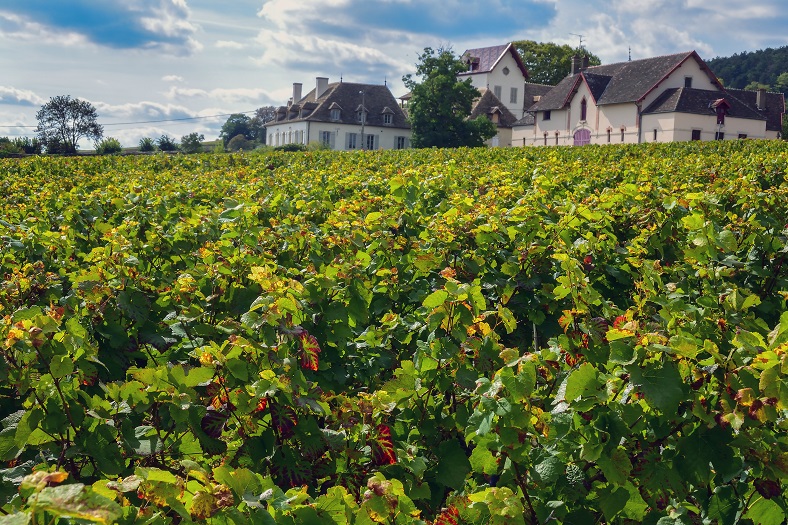
Renowned for its “feminine” wines, considered to be the finest in the Côte de Beaune, Volnay is an appellation covering almost 220 hectares in the heart of the Côte de Beaune. Situated between Meursault to the south and Pommard to the north, at an altitude of 275 metres, and with a perfect south-easterly exposure, Volnay produces exclusively red wine, with one exception. Its Santenay terroir is allowed to grow Chardonnay, which is classified as Meursault. Both the Pinot Noir and Chardonnay grapes benefit from a terroir rich in limestone, schist and gravel.
Although Volnay does not boast any grand crus, it comes close to the region’s finest in many respects. Thirty of its climats are classified as premier crus – Clos de la Bousse d’Or, a premier cru plot and monopole owned by Domaine de la Pousse d’Or, tops the list.
Here are our tasting tips. While the generic appellations are not intended for laying down, the premier crus can easily be cellared for ten or so years. Although slightly closed in their youth, these wines reveal superb aromatic complexity, great density, and assertive but always elegant tannins. However, if patience isn’t your strong point, don’t worry – “simple” Volnay village wines are a popular choice for their finesse, suppleness and immediate drinkability.
➡️ Find Volnay wines on sale